About this ebook
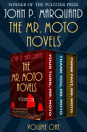
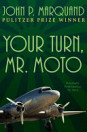
From Shanghai to Honolulu to Manchuria, the 3rd chapter in the adventures of Imperial Japan's top secret agent is an international thrill ride
Wilson Hitchings is ready to assume his rightful place at Hitchings Brothers, one of the oldest mercantile banks in China. His first task takes him to Hawaii, where he must persuade his cousin Eva to close Hitchings Plantation, a gambling establishment started by her father, the black sheep of the family. The senior members of the bank believe that the casino is tarnishing the venerable Hitchings name. Little do they know how right they are.
Unbeknownst to Eva, her father's establishment has become a key strand in a web of political and financial intrigue stretching all the way to the Far East. When Wilson uncovers the plot and realizes just how much danger he and Eva are in, he has no choice but to trust Mr. Moto, a Japanese spymaster who claims to be in Honolulu on a similar mission. But with a remorseless killer and a cast of shady international characters tracking their every move, this unlikely trio might be facing odds far too long to beat.
First serialized in the Saturday Evening Post, John P. Marquand's popular and acclaimed Mr. Moto Novels were the inspiration for 8 films starring Peter Lorre.
From Shanghai to Honolulu to Manchuria, the 3rd chapter in the adventures of Imperial Japan's top secret agent is an international thrill ride
Wilson Hitchings is ready to assume his rightful place at Hitchings Brothers, one of the oldest mercantile banks in China. His first task takes him to Ha...
Discover more
About the author
John P. Marquand (1893–1960) was a Pulitzer Prize–winning author, proclaimed "the most successful novelist in the United States" by Life magazine in 1944. A descendant of governors of the Massachusetts Bay Colony, shipping magnates Daniel Marquand and Samuel Curzon, and famed nineteenth-century writer Margaret Fuller, Marquand always had one foot inside the blue-blooded New England establishment, the focus of his social satire. But he grew up on the outside, sent to live with maiden aunts in Newburyport, Massachusetts, the setting of many of his novels, after his father lost the once-considerable family fortune in the crash of 1907. From this dual perspective, Marquand crafted stories and novels that were applauded for their keen observation of cultural detail and social mores.
By the 1930s, Marquand was a regular contributor to the Saturday Evening Post, where he debuted the character of Mr. Moto, a Japanese secret agent. No Hero, the first in a series of bestselling spy novels featuring Mr. Moto, was published in 1935. Three years later, Marquand won the Pulitzer Prize for Fiction for The Late George Apley, a subtle lampoon of Boston's upper classes. The novels that followed, including H.M. Pulham, Esquire (1941), So Little Time (1943), B.F.'s Daughter (1946), Point of No Return (1949), Melvin Goodwin, USA (1952), Sincerely, Willis Wayde (1955), and Women and Thomas Harrow (1959), cemented his reputation as the preeminent chronicler of contemporary New England society and one of America's finest writers.
By the 1930s, Marquand was a regular contributor to the Saturday Evening Post, where he debuted the character of Mr. Moto, a Japanese secret agent. No Hero, the first in a series of bestselling spy novels featuring Mr. Moto, was published in 1935. Three years later, Marquand won the Pulitzer Prize for Fiction for The Late George Apley, a subtle lampoon of Boston's upper classes. The novels that followed, including H.M. Pulham, Esquire (1941), So Little Time (1943), B.F.'s Daughter (1946), Point of No Return (1949), Melvin Goodwin, USA (1952), Sincerely, Willis Wayde (1955), and Women and Thomas Harrow (1959), cemented his reputation as the preeminent chronicler of contemporary New England society and one of America's finest writers.
John P. Marquand (1893–1960) was a Pulitzer Prize–winning author, proclaimed "the most successful novelist in the United States" by Life magazine in 1944. A descendant of governors of the Massachusetts Bay Colony, shipping magnates Daniel Marquand and Samuel Curzon, and famed nineteenth-century w...
Rate this ebook
Tell us what you think.
Reading information
Smartphones and tablets
Install the Google Play Books app for Android and iPad/iPhone. It syncs automatically with your account and allows you to read online or offline wherever you are.
Laptops and computers
You can listen to audiobooks purchased on Google Play using your computer's web browser.
eReaders and other devices
To read on e-ink devices like Kobo eReaders, you'll need to download a file and transfer it to your device. Follow the detailed Help Center instructions to transfer the files to supported eReaders.