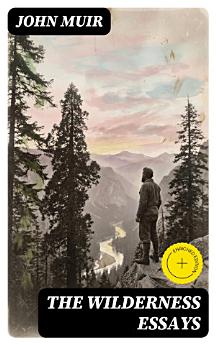
The Wilderness Essays: Enriched edition. Lyrical Essays on American Wildlands, Spiritual Nature, and the Early Call for Conservation
Dec 2023 · DigiCat
Ebook
1966
Pages
family_home
Eligible
info
About this ebook
In "The Wilderness Essays," John Muir eloquently articulates his profound reverence for nature, weaving personal experience with philosophical reflection. This collection of essays, written in the late 19th century, encapsulates Muir's passionate advocacy for the preservation of the American wilderness, employing a lyrical and descriptive prose style that vividly captures the beauty and intricacies of the natural world. Muir's writing is not only a reflection of the Romantic literary tradition but also acts as a significant precursor to the environmental movement, offering readers a lens through which to appreciate both the aesthetic and intrinsic value of unspoiled landscapes. John Muir, often referred to as the "Father of the National Parks," was a Scottish-American naturalist whose childhood and early adulthood were steeped in the wonder of the natural world. His experiences in the Sierra Nevada and other wild regions shaped his convictions about conservation and the urgent need to safeguard nature against industrialization. Muir's travels and observations inspired him to become a vocal advocate for establishing national parks, which informs the essays' call to action. "The Wilderness Essays" is an essential read for anyone interested in environmental literature, nature writing, or the historical context of conservation efforts in America. Muir's insights resonate deeply today, urging readers to reconnect with the wilderness and consider their role in its ongoing preservation. In this enriched edition, we have carefully created added value for your reading experience: - A comprehensive Introduction outlines these selected works' unifying features, themes, or stylistic evolutions. - The Author Biography highlights personal milestones and literary influences that shape the entire body of writing. - A Historical Context section situates the works in their broader era—social currents, cultural trends, and key events that underpin their creation. - A concise Synopsis (Selection) offers an accessible overview of the included texts, helping readers navigate plotlines and main ideas without revealing critical twists. - A unified Analysis examines recurring motifs and stylistic hallmarks across the collection, tying the stories together while spotlighting the different work's strengths. - Reflection questions inspire deeper contemplation of the author's overarching message, inviting readers to draw connections among different texts and relate them to modern contexts. - Lastly, our hand‐picked Memorable Quotes distill pivotal lines and turning points, serving as touchstones for the collection's central themes.
In "The Wilderness Essays," John Muir eloquently articulates his profound reverence for nature, weaving personal experience with philosophical reflection. This collection of essays, written in the late 19th century, encapsulates Muir's passionate advocacy for the preservation of the American wild...
About the author
John Muir (1838–1914) was an influential Scottish-American naturalist, author, environmental philosopher, glaciologist, and early advocate for the preservation of wilderness in the United States. His writings and philosophy greatly influenced the American conservation movement, culminating in the establishment of several national parks and the founding of the Sierra Club. With a deep passion for nature, his work often celebrated the beauty and spiritual value of the natural world, advocating that humans must maintain a harmonious relationship with the earth. In 'The Wilderness Essays', Muir compiled a series of essays that showcase his naturalist philosophy and profound reflections on the wilderness experiences that shaped his thoughts on conservation and preservation. Muir's literary style is characterized by vivid descriptions, personification of nature, and a profound sense of wonder and reverence for the natural world. His notions on the interconnectivity of nature were ahead of his time, and his books, including this compendium, remain seminal in the genres of nature writing and environmental ethics. Muir's contribution to literature and environmental activism render him not just a significant author but also a key figure in the history of American conservation.
John Muir (1838–1914) was an influential Scottish-American naturalist, author, environmental philosopher, glaciologist, and early advocate for the preservation of wilderness in the United States. His writings and philosophy greatly influenced the American conservation movement, culminating in the...
Rate this ebook
Tell us what you think.
Reading information
Smartphones and tablets
Install the Google Play Books app for Android and iPad/iPhone. It syncs automatically with your account and allows you to read online or offline wherever you are.
Laptops and computers
You can listen to audiobooks purchased on Google Play using your computer's web browser.
eReaders and other devices
To read on e-ink devices like Kobo eReaders, you'll need to download a file and transfer it to your device. Follow the detailed Help Center instructions to transfer the files to supported eReaders.