About this ebook
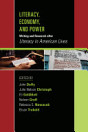
After Plato redefines the relationships of rhetoric for scholars, teachers, and students of rhetoric and writing in the twenty-first century. Featuring essays by some of the most accomplished scholars in the field, the book explores the diversity of ethical perspectives animating contemporary writing studies—including feminist, postmodern, transnational, non-Western, and virtue ethics—and examines the place of ethics in writing classrooms, writing centers, writing across the curriculum programs, prison education classes, and other settings.
When truth is subverted, reason is mocked, racism is promoted, and nationalism takes center stage, teachers and scholars of writing are challenged to articulate the place of rhetorical ethics in the writing classroom and throughout the field more broadly. After Plato demonstrates the integral place of ethics in writing studies and provides a roadmap for future conversations about ethical rhetoric that will play an essential role in the vitality of the field.
Contributors: Fred Antczak, Patrick W. Berry, Vicki Tolar Burton, Rasha Diab, William Duffy, Norbert Elliot, Gesa E. Kirsch, Don J. Kraemer, Paula Mathieu, Robert J. Mislevy, Michael A. Pemberton, James E. Porter, Jacqueline Jones Royster, Xiaoye You, Bo Wang
After Plato redefines the relationships of rhetoric for scholars, teachers, and students of rhetoric and writing in the twenty-first century. Featuring essays by some of the most accomplished scholars in the field, the book explores the diversity of ethical perspectives animating contemporary wri...
About the author
John Duffy is professor of English at the University of Notre Dame. He has published on the ethics of writing, the rhetoric of disability, and the historical development of literacy and rhetoric in cross-cultural contexts. His books include the edited collections After Plato and Literacy, Economy, and Power and he is the author of Provocations of Virtue and Writing from These Roots, awarded the 2009 Outstanding Book Award by the Conference on College Composition and Communication. Duffy is a recipient of a National Endowment for the Humanities Fellowship and the Rev. Edmund P. Joyce, C.S.C., Award for Excellence in Undergraduate Teaching.
Lois Agnew is professor of Writing and rhetoric at Syracuse University. She is the author of two books, Outward, Visible Propriety and Thomas De Quincey: British Rhetoric’s Romantic Turn, and has published articles in College English, Rhetoric Society Quarterly, CCC, Rhetorica, Rhetoric Review, and other journals and edited collections. Agnew is the recipient of the 2015 William Wasserstrom Prize for Graduate Teaching.
Lois Agnew is professor of Writing and rhetoric at Syracuse University. She is the author of two books, Outward, Visible Propriety and Thomas De Quincey: British Rhetoric’s Romantic Turn, and has published articles in College English, Rhetoric Society Quarterly, CCC, Rhetorica, Rhetoric Review, and other journals and edited collections. Agnew is the recipient of the 2015 William Wasserstrom Prize for Graduate Teaching.
John Duffy is professor of English at the University of Notre Dame. He has published on the ethics of writing, the rhetoric of disability, and the historical development of literacy and rhetoric in cross-cultural contexts. His books include the edited collections After Plato and Literacy, Economy...
Rate this ebook
Tell us what you think.
Reading information
Smartphones and tablets
Install the Google Play Books app for Android and iPad/iPhone. It syncs automatically with your account and allows you to read online or offline wherever you are.
Laptops and computers
You can listen to audiobooks purchased on Google Play using your computer's web browser.
eReaders and other devices
To read on e-ink devices like Kobo eReaders, you'll need to download a file and transfer it to your device. Follow the detailed Help Center instructions to transfer the files to supported eReaders.