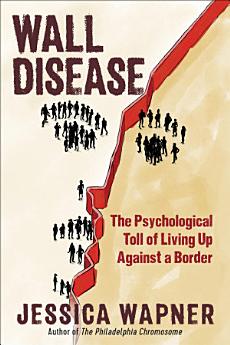
Wall Disease: The Psychological Toll of Living Up Against a Border
Oct 2020 · The Experiment + ORM
Ebook
130
Pages
family_home
Eligible
info
About this ebook
We build border walls to keep danger out. But do we understand the danger posed by walls themselves? East Germans were the first to give the crisis a name: Mauerkrankheit, or "wall disease." The afflicted—everyday citizens living on both sides of the Berlin wall—displayed some combination of depression, anxiety, excitability, suicidal ideation, and paranoia. The Berlin Wall is no more, but today there are at least seventy policed borders like it. What are they doing to our minds?
Jessica Wapner investigates, following a trail of psychological harm around the world. In Brownsville, Texas, the hotly contested US-Mexico border wall instills more feelings of fear than of safety. And in eastern Europe, a Georgian grandfather pines for his homeland—cut off from his daughters, his baker, and his bank by the arbitrary path of a razor-wire fence built in 2013. Even in borderlands riven by conflict, the same walls that once offered relief become enduring reminders of trauma and helplessness.
Our brains, Wapner writes, devote "border cells" to where we can and cannot go safely—so, a wall that goes up in our town also goes up in our minds. Weaving together interviews with those living up against walls and expert testimonies from geographers, scientists, psychologists, and other specialists, she explores the growing epidemic of wall disease—and illuminates how neither those "outside" nor "inside" are immune.
We build border walls to keep danger out. But do we understand the danger posed by walls themselves? East Germans were the first to give the crisis a name: Mauerkrankheit, or "wall disease." The afflicted—everyday citizens living on both sides of the Berlin wall—displayed some combination of depr...
Discover more
About the author
Jessica Wapner is a journalist and former science editor at Newsweek whose work has appeared in The New Yorker, The New York Times, Wired, Medium, Discover, Popular Science, Self, Scientific American, New York magazine, The Atlantic, and elsewhere. Her first book, The Philadelphia Chromosome, was named a top ten nonfiction book by The Wall Street Journal. She lives in Brooklyn.
Jessica Wapner is a journalist and former science editor at Newsweek whose work has appeared in The New Yorker, The New York Times, Wired, Medium, Discover, Popular Science, Self, Scientific American, New York magazine, The Atlantic, and elsewhere. Her first book, The Philadelphia Chromosome, was...
Rate this ebook
Tell us what you think.
Reading information
Smartphones and tablets
Install the Google Play Books app for Android and iPad/iPhone. It syncs automatically with your account and allows you to read online or offline wherever you are.
Laptops and computers
You can listen to audiobooks purchased on Google Play using your computer's web browser.
eReaders and other devices
To read on e-ink devices like Kobo eReaders, you'll need to download a file and transfer it to your device. Follow the detailed Help Center instructions to transfer the files to supported eReaders.