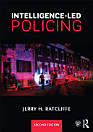
Intelligence-Led Policing: Edition 3
About this ebook
The revised and updated third edition of this foundational policing text includes new case studies and viewpoints, a revised crime funnel for serious crime, and a new chapter expanding on intelligence-led policing ethics and risk. A revised structure within the central chapters brings forward the definition of intelligence-led policing, increases discussion around confidential sources and informants, and highlights new thinking in police decision-making and risk management. Changes reflect the continuing evolution of ILP into a framework capable of encompassing more operational police activity than simply organised crime and recidivist offenders.
Topics covered in this book include:
• The origins and aims of intelligence-led policing
• A comparison of intelligence-led policing with other conceptual models of policing
• An exploration of analysis concepts and the role of analysis in target selection
• Evaluations of intelligence-led policing as a crime-control strategy
Written by an expert in the field, this third edition continues to offer a comprehensive and engaging introduction to intelligence-led policing for students, practitioners, and scholars of policing, criminal intelligence, and crime analysis. This book will be of particular interest to professionals within the law enforcement environment: senior officers, middle management, analysts, and operational staff.
Discover more
About the author
Jerry H. Ratcliffe is the faculty director of the Master of Applied Criminology and Police Leadership program and a professor of practice in the Department of Criminology at the University of Pennsylvania. A former British police officer, he is also a scientific advisor to the International Association of Chiefs of Police.