About this ebook
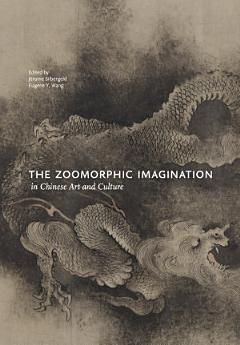
China has an age-old zoomorphic tradition. The First Emperor was famously said to have had the heart of a tiger and a wolf. The names of foreign tribes were traditionally written with characters that included animal radicals. In modern times, the communist government frequently referred to Nationalists as “running dogs,” and President Xi Jinping, vowing to quell corruption at all levels, pledged to capture both “the tigers” and “the flies.” Splendidly illustrated with works ranging from Bronze Age vessels to twentieth-century conceptual pieces, this volume is a wide-ranging look at zoomorphic and anthropomorphic imagery in Chinese art. The contributors, leading scholars in Chinese art history and related fields, consider depictions of animals not as simple, one-for-one symbolic equivalents: they pursue in depth, in complexity, and in multiple dimensions the ways that Chinese have used animals from earliest times to the present day to represent and rhetorically stage complex ideas about the world around them, examining what this means about China, past and present.
In each chapter, a specific example or theme based on real or mythic creatures is derived from religious, political, or other sources, providing the detailed and learned examination needed to understand the means by which such imagery was embedded in Chinese cultural life. Bronze Age taotie motifs, calendrical animals, zoomorphic modes in Tantric Buddhist art, Song dragons and their painters, animal rebuses, Heaven-sent auspicious horses and foreign-sent tribute giraffes, the fantastic specimens depicted in the Qing Manual of Sea Oddities, the weirdly indeterminate creatures found in the contemporary art of Huang Yong Ping—these and other notable examples reveal Chinese attitudes over time toward the animal realm, explore Chinese psychology and patterns of imagination, and explain some of the critical means and motives of Chinese visual culture.
The Zoomorphic Imagination in Chinese Art and Culture will find a ready audience among East Asian art and visual culture specialists and those with an interest in literary or visual rhetoric.
Contributors: Sarah Allan, Qianshen Bai, Susan Bush, Daniel Greenberg, Carmelita (Carma) Hinton, Judy Chungwa Ho, Kristina Kleutghen, Kathlyn Liscomb, Jennifer Purtle, Jerome Silbergeld, Henrik Sørensen, and Eugene Y. Wang.
In each chapter, a specific example or theme based on real or mythic creatures is derived from religious, political, or other sources, providing the detailed and learned examination needed to understand the means by which such imagery was embedded in Chinese cultural life. Bronze Age taotie motifs, calendrical animals, zoomorphic modes in Tantric Buddhist art, Song dragons and their painters, animal rebuses, Heaven-sent auspicious horses and foreign-sent tribute giraffes, the fantastic specimens depicted in the Qing Manual of Sea Oddities, the weirdly indeterminate creatures found in the contemporary art of Huang Yong Ping—these and other notable examples reveal Chinese attitudes over time toward the animal realm, explore Chinese psychology and patterns of imagination, and explain some of the critical means and motives of Chinese visual culture.
The Zoomorphic Imagination in Chinese Art and Culture will find a ready audience among East Asian art and visual culture specialists and those with an interest in literary or visual rhetoric.
Contributors: Sarah Allan, Qianshen Bai, Susan Bush, Daniel Greenberg, Carmelita (Carma) Hinton, Judy Chungwa Ho, Kristina Kleutghen, Kathlyn Liscomb, Jennifer Purtle, Jerome Silbergeld, Henrik Sørensen, and Eugene Y. Wang.
China has an age-old zoomorphic tradition. The First Emperor was famously said to have had the heart of a tiger and a wolf. The names of foreign tribes were traditionally written with characters that included animal radicals. In modern times, the communist government frequently referred to Nation...
Discover more
About the author
Jerome Silbergeld (Editor)
Jerome Silbergeld is the P. Y. and Kinmay W. Tang Professor of Chinese Art History at Princeton University and director of Princeton’s Tang Center for East Asian Art.
Eugene Y. Wang (Editor)
Eugene Y. Wang is the Abby Aldrich Rockefeller Professor of Asian Art at Harvard University.
Jerome Silbergeld (Editor)
Jerome Silbergeld is the P. Y. and Kinmay W. Tang Professor of Chinese Art History at Princeton University and director of Princeton’s Tang Center for East Asian Art.
Eugene Y. Wang (Editor)
Eugene Y. Wang is the Abby Aldrich Rockefeller Professor of Asian Art at Har...
Rate this ebook
Tell us what you think.
Reading information
Smartphones and tablets
Install the Google Play Books app for Android and iPad/iPhone. It syncs automatically with your account and allows you to read online or offline wherever you are.
Laptops and computers
You can listen to audiobooks purchased on Google Play using your computer's web browser.
eReaders and other devices
To read on e-ink devices like Kobo eReaders, you'll need to download a file and transfer it to your device. Follow the detailed Help Center instructions to transfer the files to supported eReaders.