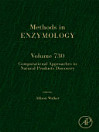
Lipids and Membranes: Detection by Imaging and Lipidomics

· Methods in Enzymology Book 726 · Academic Press
Ebook
412
Pages
Eligible

About this ebook

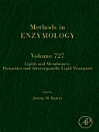
Lipids and Membranes: Detection by Imaging and Lipidomics, Volume 727 covers lipids, a chemically diverse set of biological molecules subject to rapid metabolism and transport. This dynamic behavior has motivated the development of methods across multiple disciplines for their detection and manipulation. Split into three parts, the chapters in this new release include Measurement of fatty acid esters of hydroxy fatty acids, Superresolution organelle imaging with lipophilic HIDE probes, Ultra-high resolution analysis of membrane lipids from 15N metabolically labeled mice, Superresolution lipid imaging with expansion microscopy, High-resolution phosphoinositide analysis in healthy versus disease cells, and much more.Additional chapters focus on Alkyne lipids as tracers of lipid metabolism, Imaging oxidative stress in biomembranes, Imaging the dynamics of phosphatidylinositol 4-phosphate metabolism, Lipidomics for studying sphingolipids in cell death, Non-invasive imaging of phosphoinositides with genetically encoded lipid biosensors, Profiling lipotypes at the single cell level in heterogenous populations, MS imaging of phosphoinositides, and much more. - Provides readers with the latest advances in the biochemistry of lipids and biological membranes - Focuses on cutting-edge protocols by leaders in the disciplines of lipid and membrane chemistry, biochemistry, biophysics, and biology - Covers approaches for lipid detection by imaging and lipidomics
Lipids and Membranes: Detection by Imaging and Lipidomics, Volume 727 covers lipids, a chemically diverse set of biological molecules subject to rapid metabolism and transport. This dynamic behavior has motivated the development of methods across multiple disciplines for their detection and manip...

Discover more

About the author

Jeremy M. Baskin is Associate Professor, Nancy and Peter Meinig Family Investigator in the Life Sciences, and Director of the Chemistry–Biology Interface Program at Cornell University, with appointments in the Department of Chemistry and Chemical Biology and the Weill Institute for Cell and Molecular Biology. He was born and raised in Montreal, Canada and received his undergraduate education at the Massachusetts Institute of Technology, with a major in Chemistry and minors in Biology and Music. Jeremy carried out Ph.D. studies supported by NDSEG and NSF graduate fellowships in Carolyn Bertozzi’s group at the University of California, Berkeley, focusing on development of bioorthogonal chemistries. Jeremy received postdoctoral training in lipid cell biology as a Jane Coffin Childs fellow at Yale University with Pietro De Camilli. Research in the Baskin lab centers on the chemical and cell biology of lipid metabolism and signaling. The Baskin lab exploits bioorthogonal chemistry to develop advanced tools for high-resolution lipid imaging and harnesses optogenetics and protein engineering for the design of membrane editors capable of spatiotemporal manipulation of the lipid composition of cellular membranes. Using these and other approaches, his lab elucidates novel mechanisms underlying physiological and pathological lipid metabolism and signaling events. Jeremy has been the recipient of numerous awards, including Beckman Young Investigator, Sloan Research Fellowship, NSF CAREER, ACS Young Academic Investigator, ASBMB Walter A. Shaw Young Investigator in Lipid Research, ICBS Young Chemical Biologist Award, and ACS Chemical Biology Young Investigator Award. He is currently Associate Editor at Biochemistry.
Jeremy M. Baskin is Associate Professor, Nancy and Peter Meinig Family Investigator in the Life Sciences, and Director of the Chemistry–Biology Interface Program at Cornell University, with appointments in the Department of Chemistry and Chemical Biology and the Weill Institute for Cell and Molec...

Rate this ebook

Tell us what you think.

Reading information

Smartphones and tablets
Install the Google Play Books app for Android and iPad/iPhone. It syncs automatically with your account and allows you to read online or offline wherever you are.
Laptops and computers
You can listen to audiobooks purchased on Google Play using your computer's web browser.
eReaders and other devices
To read on e-ink devices like Kobo eReaders, you'll need to download a file and transfer it to your device. Follow the detailed Help Center instructions to transfer the files to supported eReaders.