Lonesome Jar: Poetic Fables
About this ebook
The stories in Lonesome Jar: Poetic Fables follow the travails and triumphs of such objects and animals, presenting charmingly anthropomorphized fables. “Lovebirds” tells the story of a one-winged bird that can only fly after finding his other half; “Surprise Lilies” relates a tale of two cousins turned respectively into a flower and its leaves in punishment for their forbidden love; “The Seomjingang River” gives the account of a rebellious river that finally accepts its destiny of becoming the sea. The brief yet meaningful fables offer insight into the love, patience, and relationships of our human world; with compassion for life and its challenges, they whisper to readers that to live is to love and grow together. Lonesome Jar: Poetic Fables offers twenty such gems that demonstrate Jeong’s broad and integrative worldview that spans both Buddhist and Christian traditions.
Discover more
About the author
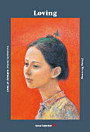
Born in 1950 in Hadong, Gyeongsangnam-do, Jeong Ho-seung was raised in the city of Daegu and received his bachelor’s and master’s degree from the Department of Korean Language and Literature at Kyunghee University in Seoul. He won the poetry prizes in the 1972 Hankook Ilbo New Spring Literary Contest and the 1973 Daehan Daily New Spring Literary Contest, and the short-story prize in the 1982 Chosun Ilbo New Spring Literary Contest, and was active in the “Anti-Poetry” literary group. His poetry collections include From Sorrow to Joy, Seoul’s Jesus, Dawn Letter, Stars Are Warm, Love Then Die, To Be Lonely Is to Be Human, Take a Train When the Tears Fall, In This Short While, An Embrace, Earning My Keep, Travels, I Refuse Hope, and In Search of You[번1] . He also released the poetry anthologies An Unshakable Reed, The People I Love, and To Daffodils; Korean-English bilingual poetry collections A Letter Not Sent and Though Flowers Fall I Have Never Forgotten You; and the essay collections Words That Have Given Me Strength, Words That Have Given Me Courage, and Without You, There is No Me, among others. The storybooks for adults Loving and Lonesome Jar: Poetic Fables have been translated into English, German, Chinese, and Vietnamese; and his poetry collections have been translated into Japanese, Spanish, Russian, Georgian, and Mongolian. Jeong’s accolades include the So-Wol Literary Prize, the Jeong Ji-young Literary Prize, the Pyeonun Literary Prize, the Catholic Literary Award, the Sanghwa Poetry Award, and the Gongcho Literary Prize.
Brother Anthony of Taizé (An Sonjae) was born in 1941 in England. He studied Medieval and Modern Languages at Oxford University and in 1969 he joined the Taizé Community in France. He taught English literature at Sogang University, Seoul, for nearly three decades. Since 1990 he has published more than forty volumes of translated works by such esteemed Korean authors as Ku Sang, Ko Un, Cheon Sang-byeong, Shin Kyeong-nim, Park Ynhui, Yi Mun-yol, and Do Jong-hwan. Since January 2011 he has been president of the Royal Asiatic Society’s Korea branch. He received the Korean government’s Award of Merit, Jade Crown class, in October 2008 for his work in spreading knowledge of Korean literature throughout the world. In 2015 he was awarded an honorary MBE (Member of the British Empire) by Queen Elizabeth for his contributions to British-Korean relations.