About this ebook
An NYRB Classics Original
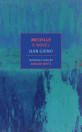
Deep in Provence, a century ago, four stone houses perch on a hillside. Wildness presses in from all sides. Beyond a patchwork of fields, a mass of green threatens to overwhelm the village. The animal world—a miming cat, a malevolent boar—displays a mind of its own.
The four houses have a dozen residents—and then there is Gagou, a mute drifter. Janet, the eldest of the men, is bedridden; he feels snakes writhing in his fingers and speaks in tongues. Even so, all is well until the village fountain suddenly stops running. From this point on, humans and the natural world are locked in a life-and-death struggle. All the elements—fire, water, earth, and air—come into play.
From an early age, Jean Giono roamed the hills of his native Provence. He absorbed oral traditions and, at the same time, devoured the Greek and Roman classics. Hill, his first novel and the first winner of the Prix Brentano, comes fully back to life in Paul Eprile’s poetic translation.
An NYRB Classics Original
Deep in Provence, a century ago, four stone houses perch on a hillside. Wildness presses in from all sides. Beyond a patchwork of fields, a mass of green threatens to overwhelm the village. The animal world—a miming cat, a malevolent boar—displays a mind of its own.
Th...
Discover more
About the author
Jean Giono (1895–1970) was born and lived most of his life in the town of Manosque, Alpes-de-Haute-Provence. Largely self-educated, he started working as a bank clerk at the age of sixteen and reported for military service when World War I broke out. He fought in the battle of Verdun and was one of the few members of his company to survive. After the war, he returned to his job and family in Manosque and became a vocal, lifelong pacifist. After the success of Hill, which won the Prix Brentano, he left the bank and began to publish prolifically. During World War II Giono’s outspoken pacifism led some to accuse him unjustly of collaboration with the Nazis; after France’s liberation in 1944, he was imprisoned and held without charges. Despite being blacklisted after his release, Giono continued writing and was elected to the Académie Goncourt in 1954.
Paul Eprile has translated four novels by Jean Giono—Hill, Melville, The Open Road, and Fragments of a Paradise—and two by Colette—Chéri, and The End of Chéri. For Melville he was awarded the French-American Foundation Translation Prize. Eprile lives on the Niagara Escarpment northwest of Toronto.
David Abram is the director of the Alliance for Wild Ethics. A cultural ecologist, philosopher, and performance artist, he is the award-winning author of Becoming Animal: An Earthly Cosmology and The Spell of the Sensuous: Perception and Language in a More-Than-Human World. He teaches and lectures around the world and lives with his family in the foothills of the southern Rockies.
Jean Giono (1895–1970) was born and lived most of his life in the town of Manosque, Alpes-de-Haute-Provence. Largely self-educated, he started working as a bank clerk at the age of sixteen and reported for military service when World War I broke out. He fought in the battle of Verdun and was one ...
Rate this ebook
Tell us what you think.
Reading information
Smartphones and tablets
Install the Google Play Books app for Android and iPad/iPhone. It syncs automatically with your account and allows you to read online or offline wherever you are.
Laptops and computers
You can listen to audiobooks purchased on Google Play using your computer's web browser.
eReaders and other devices
To read on e-ink devices like Kobo eReaders, you'll need to download a file and transfer it to your device. Follow the detailed Help Center instructions to transfer the files to supported eReaders.