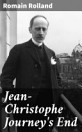
Jean-Christophe: Journey's End
Romain Rolland
1928년 1월 · IndyPublish.com
eBook
504
페이지
eBook 정보
1914. Rolland was a French novelist, dramatist, essayist, mystic, pacifist, who was awarded the Nobel Prize for Literature in 1915. Jean Christophe is the author's best-known work. The ten-volume novel was an epic story of a German musical genius. This book contains the final three volumes: Love and Friendship; The Burning Bush; and The New Dawn.
1914. Rolland was a French novelist, dramatist, essayist, mystic, pacifist, who was awarded the Nobel Prize for Literature in 1915. Jean Christophe is the author's best-known work. The ten-volume novel was an epic story of a German musical genius. This book contains the final three volumes: Love ...
저자 정보
Romain Rolland was born in Clemency, France. The family moved to Paris in 1880 in order to obtain a better schooling for their son. In 1886 Rolland entered the École Normale Supérieure. He passed his agrégation examination in 1889 and continued his studies in Rome, where he formed a lasting friendship with Malwida von Meysenbug. She knew Wagner, Liszt, Nietzsche, and Ibsen, and encouraged his first attempt to write. He received his doctorate in art in 1895, with the first dissertation on music ever presented at the Sorbonne. Rolland became professor of art history at the École Normale in Paris. In 1904 he became a professor of the history of music at the Sorbonne. In his mid-30s he wrote successful dramas about the French Revolution. After his best-known work, Jean-Christophe, was finished, Rolland devoted himself entirely to writing. The ten-volume novel was an epic story of a German musical genius. Rolland had already published a biography on Beethoven in 1903. On completion of Jean-Christophe, Rolland was awarded the Grand Prize in Literature by the French Academy in 1913 and the Nobel Prize for Literature in 1915. With a collection of antiwar writings published in Swiss newspapers, Above the Battle, Rolland became a prominent figure in the pacifist movement during World War I. The book caused protests in France, but Rolland condemned the war and tried to show the oneness of western culture. Due to these opinions he was called traitor. In 1913 he wrote the novel Colas Breugnon, which was published in 1919. In the 1920s Rolland became interested in Indian philosophy and wrote a biography of Mahatma Gandhi. In 1923 Rolland founded the international magazine Europe, which opposed nationalism. Gradually he started to reject Stalinism, and support non-violent social change. From 1914 to 1937 Rolland lived in Switzerland. There he completed the second novel cycle, The Enchanted Soul. Rolland became a mouthpiece of the opposition to Fascism and the Nazis. During the last years of his life, Rolland lived in Vézelay and worked on the biography of Charles Péguy. On December 30, 1944 he succumbed to tuberculosis, an illness that had afflicted him since his childhood.
Romain Rolland was born in Clemency, France. The family moved to Paris in 1880 in order to obtain a better schooling for their son. In 1886 Rolland entered the École Normale Supérieure. He passed his agrégation examination in 1889 and continued his studies in Rome, where he formed a lasting frien...
이 eBook 평가
의견을 알려주세요.
읽기 정보
스마트폰 및 태블릿
노트북 및 컴퓨터
컴퓨터의 웹브라우저를 사용하여 Google Play에서 구매한 오디오북을 들을 수 있습니다.
eReader 및 기타 기기
Kobo eReader 등의 eBook 리더기에서 읽으려면 파일을 다운로드하여 기기로 전송해야 합니다. 지원되는 eBook 리더기로 파일을 전송하려면 고객센터에서 자세한 안내를 따르세요.