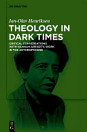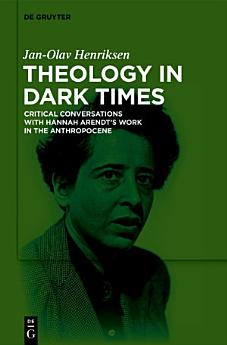
Theology in Dark Times: Critical Conversations with Hannah Arendt’s Work in the Anthropocene
About this ebook
Accordingly, the present work argues that Hannah Arendt’s work is of political, ecological and theological relevance. The present book is written because of the relatively limited reception by political ecologists, theologians, ethicists, and philosophers of religion who engage in these topics. The connection between the different horizons within which Arendt’s work is engaged is closer than it might appear at first glance. The book is not only an attempt to interpret Arendt in light of contemporary challenges; it also seeks to reflect critically on her ideas. It approaches Arendt’s work through the lenses of theology and especially theological anthropology. Contrary to what some may assume, the perspective this approach represents does not overlook the significance of historical, political, social, and cultural contexts. A conversation with Arendt’s ideas may play a crucial role, also because of her criticism of significant strands of Christian faith.
The book would be of interest to anyone engaged in Arendt’s work and in the dialogue between philosophy and contemporary theology.
Discover more
About the author
Jan-Olav Henriksen, MF Vitenskapelig høyskole, Oslo.