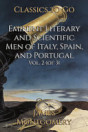
Eminent Literary and Scientific Men of Italy, Spain, and Portugal: Restored Classics to Go Edition
About this ebook
Discover more
About the author
James Montgomery (1771–1854) was a Scottish poet, hymn writer, editor, and spirited advocate for reform whose life bridged the worlds of literature, religion, and public conscience. Born in Irvine to Moravian missionary parents and educated in a disciplined religious environment, he was drawn early to books, verse, and the moral concerns that would shape his career. After working in trade and journalism, he became editor of the Sheffield Iris, a position that brought both literary influence and legal trouble because of his outspoken political views. Over time, Montgomery established himself as one of the most respected voices of his age, admired for his poems, hymns, essays, and biographical and critical writings, as well as for his careful attention to the lives of notable thinkers and writers beyond Britain. His work often blends devotional feeling, social sympathy, and a strong sense of human dignity, with recurring themes of faith, justice, suffering, and the power of moral imagination. That combination gives his writing lasting relevance today, especially for readers interested in how literature can serve both beauty and conscience. Montgomery's legacy endures not only in religious and poetic traditions, but also in his example as a writer who believed that art should speak to the needs of ordinary people and the responsibilities of public life. Readers who enjoy reflective poetry, literary biography, and writing shaped by ethical purpose will find him especially rewarding.