About this ebook
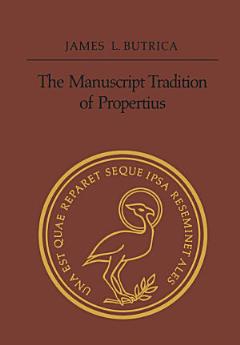
The elegist Sextus Propertius (ca 50–ca 16 BC) is generally reckoned among the most difficult of Latin authors. At the root of this difficulty lies a deeply corrupt text and uncertainty over the manuscript transmission; moreover, the manuscripts used in the standard editions of today have been selected without a comprehensive examination of the surviving copies. This study, the fullest survey of the manuscripts so far, considers the affiliation of more than 140 complete or partial witnesses and offers a thorough reassessment of the tradition. The principal novelty is the argument that six Renaissance copies represent an independent third witness to the archetype, revealing passages where corruptions, glosses, or medieval corrections are now accepted as the words of Propertius and suggesting that the archetype was far more corrupt than now commonly supposed. The study is in two parts. In Part One, after a survey of Propertius’ fortuna in the Middle Ages, the author considers the affiliation and history of the known manuscripts and editions to 1502, then offers a text and revised apparatus of four elegies; in Part Two he presents detailed descriptions of 143 manuscripts, most of them from personal inspection.
The elegist Sextus Propertius (ca 50–ca 16 BC) is generally reckoned among the most difficult of Latin authors. At the root of this difficulty lies a deeply corrupt text and uncertainty over the manuscript transmission; moreover, the manuscripts used in the standard editions of today have been se...
Discover more
About the author
James L. Butrica (1951-2006) was a member of the Department of Classics at Memorial University.
James L. Butrica (1951-2006) was a member of the Department of Classics at Memorial University.
Rate this ebook
Tell us what you think.
Reading information
Smartphones and tablets
Install the Google Play Books app for Android and iPad/iPhone. It syncs automatically with your account and allows you to read online or offline wherever you are.
Laptops and computers
You can listen to audiobooks purchased on Google Play using your computer's web browser.
eReaders and other devices
To read on e-ink devices like Kobo eReaders, you'll need to download a file and transfer it to your device. Follow the detailed Help Center instructions to transfer the files to supported eReaders.