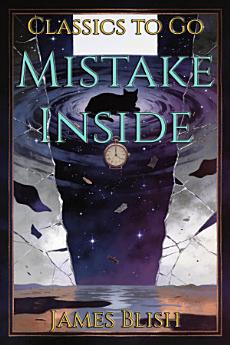
Mistake Inside: Restored Classics to Go Edition
About this ebook
Discover more
About the author
James Blish was an American writer and critic whose career helped shape the modern science fiction tradition. Born in 1921 in New Jersey, he studied biology at Rutgers and Columbia before serving in the U.S. Army during World War II, experiences that gave him both a scientific mindset and a sharp awareness of history's pressures on ordinary lives. He began publishing in the late 1940s and quickly became known for fiction that combined intellectual rigor with a willingness to ask difficult questions about faith, ethics, technology, and the future of civilization. Over the years, he moved with ease between short fiction, novels, criticism, and thoughtful speculative ideas, earning a reputation as one of the genre's most ambitious and exacting voices. His work often explores the consequences of human invention, the tension between belief and reason, and the moral costs of progress, themes that remain strikingly relevant in an age shaped by rapid technological change and uncertainty about the future. Blish's legacy endures not only in the power of his ideas but in his insistence that science fiction can be both imaginative and intellectually serious. Readers today still find in his writing a challenging, clear-eyed vision of humanity struggling to understand itself. He will especially appeal to readers who enjoy thoughtful, idea-driven science fiction, philosophical speculation, and classic authors who ask as many questions as they answer.