About this ebook
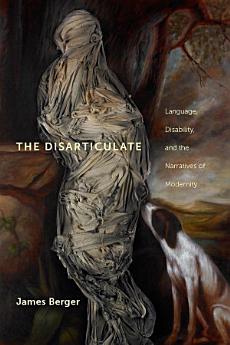
Language is integral to our
social being. But what is the status of those who stand outside of language?
The mentally disabled, “wild” children, people with autism and other
neurological disorders, as well as animals, infants, angels, and artificial
intelligences, have all engaged with language from a position at its borders.
In the intricate verbal constructions of modern literature, the
‘disarticulate’—those at the edges of language—have, paradoxically, played
essential, defining roles.
Drawing on the disarticulate figures in
modern fictional works such as Billy Budd, The Sound and the Fury,
Nightwood, White Noise, and The Echo Maker, among others,
James Berger shows in this intellectually bracing study how these characters
mark sites at which aesthetic, philosophical, ethical, political, medical, and
scientific discourses converge. It is also the place of the greatest ethical
tension, as society confronts the needs and desires of “the least of its
brothers.” Berger argues that the disarticulate is that which is unaccountable
in the discourses of modernity and thus stands as an alternative to the
prevailing social order. Using literary history and theory, as well as
disability and trauma theory, he examines how these disarticulate figures
reveal modernity’s anxieties in terms of how it constructs its others.
Language is integral to our
social being. But what is the status of those who stand outside of language?
The mentally disabled, “wild” children, people with autism and other
neurological disorders, as well as animals, infants, angels, and artificial
intelligences, have all engaged with language f...
Ratings and reviews
2 reviews

Merry Me
- Flag inappropriate
December 22, 2024
👹
About the author
James Berger is Senior Lecturer in American Studies and English at Yale University. He is author of After the End: Representations of Post-Apocalypse (1999) and a book of poetry, Prior (2013). He is the editor of Helen Keller’s The Story of My Life: The Restored Edition (2003).
James Berger is Senior Lecturer in American Studies and English at Yale University. He is author of After the End: Representations of Post-Apocalypse (1999) and a book of poetry, Prior (2013). He is the editor of Helen Keller’s The Story of My Life: The Restored Edition (2003).
Rate this ebook
Tell us what you think.
Reading information
Smartphones and tablets
Install the Google Play Books app for Android and iPad/iPhone. It syncs automatically with your account and allows you to read online or offline wherever you are.
Laptops and computers
You can listen to audiobooks purchased on Google Play using your computer's web browser.
eReaders and other devices
To read on e-ink devices like Kobo eReaders, you'll need to download a file and transfer it to your device. Follow the detailed Help Center instructions to transfer the files to supported eReaders.