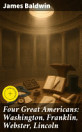
Four Great Americans: Washington, Franklin, Webster, Lincoln: Restored Classics to Go Edition
About this ebook
Discover more
About the author
James Baldwin was an influential American writer, essayist, novelist, and public intellectual whose life and work helped define modern conversations about race, identity, and justice. Born in Harlem in 1924 and shaped by the pressures of poverty, religion, and segregation, he emerged as a gifted young writer before leaving the United States for Paris, where distance sharpened his vision of America. Over the course of a remarkable career, he became known for essays, fiction, and criticism that combined moral urgency with lyrical precision, earning a lasting place among the major literary voices of the twentieth century. His writing explored the pain of racism, the complexities of family, faith, sexuality, and belonging, and the struggle to live honestly in a society built on denial. He had a rare ability to make personal experience feel universal, speaking with clarity about injustice while insisting on the dignity and humanity of those too often silenced. Today, Baldwin remains deeply relevant because the issues he confronted—racial inequality, social hypocrisy, and the search for authentic selfhood—still shape public life. His legacy endures not only in literature but in the broader cultural conversation, where his fearless honesty continues to challenge readers to think more deeply about freedom, responsibility, and love. Readers who appreciate powerful prose, social insight, and writing that is both beautiful and unflinching will find Baldwin especially rewarding.