About this ebook
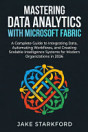
You’ll begin by understanding the architecture behind Microsoft Fabric, including OneLake, Fabric capacities, governance, security, and the platform’s unified approach to analytics. From there, the book moves into hands-on implementation, guiding you through provisioning a Fabric environment, creating workspaces, ingesting data, building lakehouses, developing pipelines, working with notebooks, and connecting multiple workloads through a common data foundation.
A major focus is OneLake and its role in eliminating unnecessary data duplication and movement. You’ll explore shortcuts, domains, data organization, versioning, disaster recovery, security, performance optimization, and cost governance before progressing into production-grade data engineering patterns.
The book also covers data science and machine learning workflows, including experiment tracking, feature stores, model deployment, and responsible AI. You’ll learn how to work with real-time intelligence through eventstreams, KQL databases, anomaly detection, automated actions, and live Power BI dashboards. The data warehousing and business intelligence sections explain semantic models, Direct Lake, row-level security, performance optimization, deployment pipelines, and enterprise reporting.
Finally, the book addresses the challenges that emerge at enterprise scale, including Microsoft Purview governance, security and compliance, capacity planning, cost management, monitoring, disaster recovery, business continuity, and organizational rollout strategies.
Whether you are learning Fabric for the first time or preparing to implement it across an organization, this guide provides the architectural knowledge, practical workflows, and implementation patterns needed to move from experimentation to production-ready modern analytics.