इस ई-बुक के बारे में जानकारी
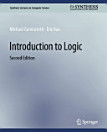
This book is a gentle but rigorous introduction to formal logic. It is intended primarily for use at the college level. However, it can also be used for advanced secondary school students, and it can be used at the start of graduate school for those who have not yet seen the material. The approach to teaching logic used here emerged from more than 20 years of teaching logic to students at Stanford University and from teaching logic to tens of thousands of others via online courses on the World Wide Web. The approach differs from that taken by other books in logic in two essential ways, one having to do with content, the other with form. Like many other books on logic, this one covers logical syntax and semantics and proof theory plus induction. However, unlike other books, this book begins with Herbrand semantics rather than the more traditional Tarskian semantics. This approach makes the material considerably easier for students to understand and leaves them with a deeper understanding of what logic is all about. The primary content difference concerns the semantics of the logic that is taught. In addition to this text, there are online exercises (with automated grading), online logic tools and applications, online videos of lectures, and an online forum for discussion. They are available at logic.stanford.edu/intrologic/. Table of Contents: Introduction / Propositional Logic / Propositional Proofs / Propositional Resolution / Satisfiability / Herbrand Logic / Herbrand Logic Proofs / Resolution / Induction / First Order Logic
This book is a gentle but rigorous introduction to formal logic. It is intended primarily for use at the college level. However, it can also be used for advanced secondary school students, and it can be used at the start of graduate school for those who have not yet seen the material. The approac...
और खोजें
लेखक के बारे में
Michael Genesereth is an associate professor in the Computer Science Department at Stanford University. He received his Sc.B. in Physics from M.I.T. and his Ph.D. in Applied Mathematics from Harvard University. He is best known for his research on Computational Logic and its applications. He has been teaching Logic to Stanford students and others for more than 20 years. He is the current director of the Logic Group at Stanford and founder and research director of CodeX (The Stanford Center for Legal Informatics). Eric J. Kao is a member of technical staff at VMware, Inc. He received his B.Math in Pure Mathematics from the University of Waterloo and his Ph.D. in Computer Science from Stanford University. His work centers on Computational Logic and its applications in cloud computing, cybersecurity, and data management. He currently leads OpenStack Congress, a leading open-source collaboration for declarative cloud management. He is passionate about education and making technical subjects more accessible. In his free time, he tutors and mentors high school students in East Palo Alto.
Michael Genesereth is an associate professor in the Computer Science Department at Stanford University. He received his Sc.B. in Physics from M.I.T. and his Ph.D. in Applied Mathematics from Harvard University. He is best known for his research on Computational Logic and its applications. He has ...
इस ई-बुक को रेटिंग दें
हमें अपनी राय बताएं.
पठन जानकारी
स्मार्टफ़ोन और टैबलेट
Android और iPad/iPhone के लिए Google Play किताबें ऐप्लिकेशन इंस्टॉल करें. यह आपके खाते के साथ अपने आप सिंक हो जाता है और आपको कहीं भी ऑनलाइन या ऑफ़लाइन पढ़ने की सुविधा देता है.
लैपटॉप और कंप्यूटर
आप अपने कंप्यूटर के वेब ब्राउज़र का उपयोग करके Google Play पर खरीदी गई ऑडियो किताबें सुन सकते हैं.
eReaders और अन्य डिवाइस
Kobo ई-रीडर जैसी ई-इंक डिवाइसों पर कुछ पढ़ने के लिए, आपको फ़ाइल डाउनलोड करके उसे अपने डिवाइस पर ट्रांसफ़र करना होगा. ई-रीडर पर काम करने वाली फ़ाइलों को ई-रीडर पर ट्रांसफ़र करने के लिए, सहायता केंद्र के निर्देशों का पालन करें.