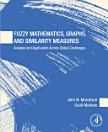
Introduction to Fuzzy Mathematics: With Applications to Global Problems
2026. g. febr. · Academic Press
E-grāmata
250
Lappuses
family_home
Piemērota
info
Par šo e-grāmatu
Delve into the intricate landscape of fuzzy mathematics, where the boundaries of traditional mathematical disciplines— analysis, abstract algebra, geometry, topology, and graph theory—are blurred to address pressing global issues. Through a rigorous examination of fuzzy sets and similarity measures, An Introduction to Fuzzy Mathematics: With Applications to Global Problems lays the groundwork for innovative solutions to complex problems, from medical diagnostics to sustainability, refugee crises, and the fight against human trafficking. Meanwhile, research projects and exercises integrated across chapters reinforce learning and apply fuzzy mathematics to real-world scenarios. Chapters are meticulously organized to guide readers through foundational concepts, including fuzzy sets, evidence theory, and implication operators, before advancing to applications in sustainability and climate change. Further, the book examines refugee dynamics and public health models, culminating in a thorough exploration of fuzzy algebraic structures, geometry, topology, and graph theory. This comprehensive resource not only enhances understanding of fuzzy mathematics but also equips readers—researchers, practitioners, and policymakers alike—with the tools to tackle critical global issues. By integrating mathematical rigor with real-life applications, the book serves as a vital reference for anyone seeking to navigate the complexities of our world through the lens of fuzzy mathematics. - Explores the innovative realm of fuzzy mathematics, addressing its foundations and application across analysis, algebra, geometry, topology, and graph theory in real-world contexts - Introduces foundational concepts in fuzzy sets, evidence theory, fuzzy similarity measures, and their implications in sustainability, climate change, and human trafficking - Equips mathematics students with essential tools to understand and apply fuzzy logic in diverse fields, enhancing their analytical and problem-solving skills - Includes engaging research projects and exercises across chapters that reinforce learning and apply fuzzy mathematics to real-world scenarios and global challenges
Delve into the intricate landscape of fuzzy mathematics, where the boundaries of traditional mathematical disciplines— analysis, abstract algebra, geometry, topology, and graph theory—are blurred to address pressing global issues. Through a rigorous examination of fuzzy sets and similarity measur...
Citas grāmatas
Par autoru
Dr. John N. Mordeson (1934-2025) was Professor Emeritus of Mathematics at Creighton University. He received his B.S., M.S., and Ph. D from Iowa State University. He was a member of Phi Kappa Phi, and published over 24 books and 270 journal articles. He was on the editorial board of numerous journals, and served as an external examiner of PhD candidates from various countries. He refereed for numerous journals and granting agencies, and was particularly interested in applying mathematics of uncertainty to combat global problems.Dr. Davender S. Malik (1958-2025) was a Professor of Mathematics at Creighton University, Omaha, Nebraska. He received his Ph.D. from Ohio University and has published more than 65 papers and 20 books on abstract algebra, applied mathematics, graph theory and automata theory and languages, fuzzy logic and its applications, programming, data structures and discrete mathematics.Dr. Sunil Mathew is Associate Professor in the Department of Mathematics at NIT, Calicut, India. He received his Masters from St. Joseph's College, Devagiri, in Calicut, and PhD from the National Institute of Technology, Calicut in the area of Fuzzy Graph Theory. He has published over 125 research papers and written 10 books. He is a member of several academic bodies and associations. He is an editor and reviewer of several international journals. He has experience of more than 20 years in teaching and research, and his current research topics include fuzzy graph theory, bio-computational modeling, graph theory, fractal geometry, and chaos.
Dr. John N. Mordeson (1934-2025) was Professor Emeritus of Mathematics at Creighton University. He received his B.S., M.S., and Ph. D from Iowa State University. He was a member of Phi Kappa Phi, and published over 24 books and 270 journal articles. He was on the editorial board of numerous journ...
Novērtējiet šo e-grāmatu
Izsakiet savu viedokli!
Informācija lasīšanai
Viedtālruņi un planšetdatori
Instalējiet lietotni Google Play grāmatas Android ierīcēm un iPad planšetdatoriem/iPhone tālruņiem. Lietotne tiks automātiski sinhronizēta ar jūsu kontu un ļaus lasīt saturu tiešsaistē vai bezsaistē neatkarīgi no jūsu atrašanās vietas.
Klēpjdatori un galddatori
Varat klausīties pakalpojumā Google Play iegādātās audiogrāmatas, izmantojot datora tīmekļa pārlūkprogrammu.
E-lasītāji un citas ierīces
Lai lasītu grāmatas tādās elektroniskās tintes ierīcēs kā Kobo e-lasītāji, nepieciešams lejupielādēt failu un pārsūtīt to uz savu ierīci. Izpildiet palīdzības centrā sniegtos detalizētos norādījumus, lai pārsūtītu failus uz atbalstītiem e-lasītājiem.