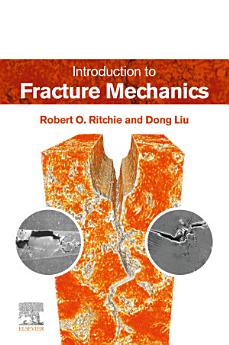
Introduction to Fracture Mechanics
মে’ ২০২১ · Elsevier
ইবুক
168
পৃষ্ঠা
family_home
যোগ্য
info
এই ইবুকখনৰ বিষয়ে
Introduction to Fracture Mechanics presents an introduction to the origins, formulation and application of fracture mechanics for the design, safe operation and life prediction in structural materials and components. The book introduces and informs the reader on how fracture mechanics works and how it is so different from other forms of analysis that are used to characterize mechanical properties. Chapters cover foundational topics and the use of linear-elastic fracture mechanics, involving both K-based characterizing parameter and G-based energy approaches, and how to characterize the fracture toughness of materials under plane-strain and non plane-strain conditions using the notion of crack-resistance or R-curves. Other sections cover far more complex nonlinear-elastic fracture mechanics based on the use of the J-integral and the crack-tip opening displacement. These topics largely involve continuum mechanics descriptions of crack initiation, slow crack growth, eventual instability by overload fracture, and subcritical cracking. - Presents how, for a given material, a fracture toughness value can be measured on a small laboratory sample and then used directly to predict the failure (by fracture, fatigue, creep, etc.) of a much larger structure in service - Covers the rudiments of fracture mechanics from the perspective of the philosophy underlying the few principles and the many assumptions that form the basis of the discipline - Provides readers with a "working knowledge" of fracture mechanics, describing its potency for damage-tolerant design, for preventing failures through appropriate life-prediction strategies, and for quantitative failure analysis (fracture diagnostics)
Introduction to Fracture Mechanics presents an introduction to the origins, formulation and application of fracture mechanics for the design, safe operation and life prediction in structural materials and components. The book introduces and informs the reader on how fracture mechanics works and h...
অধিক বিচাৰি পাওক
লিখকৰ বিষয়ে
Prof. Robert O. Ritchie is the H.T. & Jessie Chua Distinguished Professor of Engineering in the Departments of Materials Science & Engineering and Mechanical Engineering at the University of California in Berkeley; he is also Senior Materials Scientist at the Lawrence Berkeley National Laboratory. He received M.A., Ph.D. and Sc.D. degrees in materials science all from Cambridge University. He is known for his research into the mechanics and mechanisms of fracture and fatigue of a broad range of engineering and biological materials. He is a foreign member of the Royal Society and a fellow of the Royal Academy of Engineering, a member of the U.S. National Academy of Engineering, and a foreign member of the Russian Academy of Sciences and the Royal Swedish Academy of Engineering Sciences.Dr. Dong Liu is a Lecturer at the University of Bristol and she is the head of Experimental Mechanics of Advanced Materials (EMAM) Group. Her expertise lies in the multiple length-scale damage and fracture of nuclear and aerospace materials, not only in laboratory environments but also in their actual service conditions. Dr. Liu joined the University of Bristol as Lecturer in July 2018 from Oxford University (2015-2018) where she held an independent 1851 Exhibition Royal Commission Fellowship (Brunel) and an EPSRC postdoctoral research fellowship. Dr. Liu was also awarded a Junior Research Fellowship at Mansfield College (2016-2018) while at the University of Oxford.
Prof. Robert O. Ritchie is the H.T. & Jessie Chua Distinguished Professor of Engineering in the Departments of Materials Science & Engineering and Mechanical Engineering at the University of California in Berkeley; he is also Senior Materials Scientist at the Lawrence Berkeley National Laboratory...
এই ইবুকখনক মূল্যাংকন কৰক
আমাক আপোনাৰ মতামত জনাওক।
পঢ়াৰ নির্দেশাৱলী
স্মাৰ্টফ’ন আৰু টেবলেট
Android আৰু iPad/iPhoneৰ বাবে Google Play Books এপটো ইনষ্টল কৰক। ই স্বয়ংক্রিয়ভাৱে আপোনাৰ একাউণ্টৰ সৈতে ছিংক হয় আৰু আপুনি য'তে নাথাকক ত'তেই কোনো অডিঅ'বুক অনলাইন বা অফলাইনত শুনিবলৈ সুবিধা দিয়ে।
লেপটপ আৰু কম্পিউটাৰ
আপুনি কম্পিউটাৰৰ ৱেব ব্রাউজাৰ ব্যৱহাৰ কৰি Google Playত কিনা অডিঅ'বুকসমূহ শুনিব পাৰে।
ই-ৰীডাৰ আৰু অন্য ডিভাইচ
Kobo eReadersৰ দৰে ই-চিয়াঁহীৰ ডিভাইচসমূহত পঢ়িবলৈ, আপুনি এটা ফাইল ডাউনল’ড কৰি সেইটো আপোনাৰ ডিভাইচলৈ স্থানান্তৰণ কৰিব লাগিব। সমৰ্থিত ই-ৰিডাৰলৈ ফাইলটো কেনেকৈ স্থানান্তৰ কৰিব জানিবলৈ সহায় কেন্দ্ৰত থকা সবিশেষ নিৰ্দেশাৱলী চাওক।