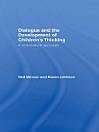
Interthinking: Putting talk to work

· Routledge
E-knjiga
144
Broj stranica
Prihvatljiva

O ovoj e-knjizi

Through using spoken language, people are able to think creatively and productively together. This ability to ‘interthink’ is an important product of our evolutionary history that is just as important for our survival today. Many kinds of work activity depend on the success of groups or teams finding joint solutions to problems. Creative achievement is rarely the product of solitary endeavour, but of people working within a collective enterprise.

Written in an accessible and jargon-free style, Interthinking: putting talk to work explores the growing body of work on how people think creatively and productively together. Challenging purely individualistic accounts of human evolution and cognition, its internationally acclaimed authors provide analyses of real-life examples of collective thinking in everyday settings including workplaces, schools, rehearsal spaces and online environments.

The authors use socio-cultural psychology to explain the processes involved in interthinking, to explore its creative power, but also to understand why collective thinking isn’t always productive or successful. With this knowledge we can maximise the constructive benefits of our ability to interthink, and understand the best ways in which we can help young people to develop, nurture and value that capability.

This book will be of great interest to academic researchers, postgraduates and undergraduates on Education and Psychology courses and to practicing teachers. It will also appeal to anyone with an interest in language, creativity and the role of psychology in everyday life.

Through using spoken language, people are able to think creatively and productively together. This ability to ‘interthink’ is an important product of our evolutionary history that is just as important for our survival today. Many kinds of work activity depend on the success of groups or teams fin...

Otkrijte više

O autoru

Karen Littleton is Professor of Psychology in Education at The Open University, where she currently directs the Centre for Research in Education and Educational Technology. In 2010 she became Editor of Routledge’s Psychology in Education book series.

Neil Mercer is Professor of Education and Chair of the Psychology and Education Group at the University of Cambridge, having previously been Professor of Language and Communications at the Open University. In 2011 he became Vice-President of the Cambridge college Hughes Hall.


Karen Littleton is Professor of Psychology in Education at The Open University, where she currently directs the Centre for Research in Education and Educational Technology. In 2010 she became Editor of Routledge’s Psychology in Education book series. Neil Mercer is Professor of Education and Cha...

Ocijenite ovu e-knjigu

Recite nam šta mislite.

Informacije o čitanju

Pametni telefoni i tableti
Instalirajte aplikaciju Google Play Knjige za Android i iPad/iPhone uređaje. Aplikacija se automatski sinhronizira s vašim računom i omogućava vam čitanje na mreži ili van nje gdje god da se nalazite.
Laptopi i računari
Audio knjige koje su kupljene na Google Playu možete slušati pomoću web preglednika na vašem računaru.
Elektronički čitači i ostali uređaji
Da čitate na e-ink uređajima kao što su Kobo e-čitači, morat ćete preuzeti fajl i prenijeti ga na uređaj. Pratite detaljne upute Centra za pomoć da prenesete fajlove na podržane e-čitače.