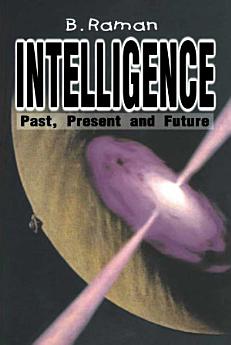
Intelligence: Past, Present & Future

· Lancer Publishers
E-book
308
Pages

À propos de cet e-book

Intelligence, past present & future takes the reader on a fascinating journey through the labyrinths of the shadowy world on Intelligence, both Military and Economic/Industrial. The author clarifies the structure of the intelligences community and the analytical organisations of the principal nations of the world. Raman’s deep personal involvement and insight into the strategic and organisational ramifications of intelligence gathering and interpretation by India’s neighbours like China and Pakistan make particularly engrossing reading. The author traces the development of the world intelligence community and also focused the reader’s attention upon the perils of modern cyber-technology ‘the Big Brother is watching syndrome’ – of which, many of us are only barely aware. As an interesting sidelight, a number of little known aspects of Pakistan’s opium economy and the ISI’s stranglehold in both Pakistan and Afghanistan are revealed.

This book is invaluable not merely for those engaged in intelligence gathering and dissemination but also for every student of current affairs and indeed everyone who wishes to remain abreast of the current international political and military scenario. 

Intelligence, past present & future takes the reader on a fascinating journey through the labyrinths of the shadowy world on Intelligence, both Military and Economic/Industrial. The author clarifies the structure of the intelligences community and the analytical organisations of the principal nat...

En voir d'autres

À propos de l'auteur

The author graduated in Chemistry from the Loyola College, University of Madras, in 1955. After studying Journalism from the same University he worked as Sub-Editor in the southern editions of the Indian Express from 1957 to May 1961. Joined the Indian Police Service in June 1961, and was posted to Madhya Pradesh in November, 1962. While posted as Superintendent of Police, Bhilai, he was selected for the Intelligence Bureau, Government of India, and joined its external intelligence division in July, 1967. On its creation he moved to the Research & Analysis Wing in September 1968.

Resigned from the IPS in 1984 after having been permanently absorbed in the R&AW. Retired on superannuation from the R&AW as Additional Secretary in August 1994. During his service with the IB and the R&AW, he had handled International Communism, Sri Lanka and the Maldives, South-East Asia, East Asia, Pakistan, Insurgency in the North-East, Terrorism in Punjab, International Terrorism and External Threats to VIP Security etc. He received the Indian Police Medal for Meritorious Service and the President’s Police Medal for Distinguished Service. He has done ‘Advanced’ in both French and German. Was a member of the Indo-Burmese Joint Boundary Demarcation Commission (1968 to 1971).

Since retirement, has written over 350 articles on national security, Pakistan, China and other subjects. Periodically speaks on national Security and the Intelligence Apparatus at the National Defence College, New Delhi, the Army College of Combat, Mhow, Madhya Pradesh, and the Defence Services Staff College, Wellington, Tamil Nadu, and on the activities of the ISI at the National Police Academy, Hyderabad. Was a member of the Government of India’s Special Task Force on the Intelligence Apparatus (May-September, 2000) and the second National Security Advisory Board (July 2000-June 2001). Honorary Member of the Board of Editorial Consultants of the “Indian Defence Review”.

The author graduated in Chemistry from the Loyola College, University of Madras, in 1955. After studying Journalism from the same University he worked as Sub-Editor in the southern editions of the Indian Express from 1957 to May 1961. Joined the Indian Police Service in June 1961, and was posted ...

Donner une note à cet e-book

Dites-nous ce que vous en pensez.

Informations sur la lecture

Smartphones et tablettes
Installez l'application Google Play Livres pour Android et iPad ou iPhone. Elle se synchronise automatiquement avec votre compte et vous permet de lire des livres en ligne ou hors connexion, où que vous soyez.
Ordinateurs portables et de bureau
Vous pouvez écouter les livres audio achetés sur Google Play à l'aide du navigateur Web de votre ordinateur.
Liseuses et autres appareils
Pour lire sur des appareils e-Ink, comme les liseuses Kobo, vous devez télécharger un fichier et le transférer sur l'appareil en question. Suivez les instructions détaillées du Centre d'aide pour transférer les fichiers sur les liseuses compatibles.