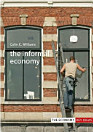
Informal Economy
Feb 2019 · Edinburgh University Press
e-Buku
160
Halaman
family_home
Layak
info
Perihal e-buku ini
The “informal” economy economic activity and income outside government regulation, taxation and observation is, by its very nature, difficult to quantify. Recent estimates suggest it accounts, in OECD countries, for around 13% of national income (in the UK, the equivalent of £150 billion) and in developing nations it can make up as much as three-quarters of all non-agricultural employment. Whatever the exact figures, it is clear that the informal economy plays a significant role in national incomes (eventhough excluded from calculations of GDP or GNP) and affects a large share of the global workforce.
Colin C. Williams provides an authoritative introduction to the topic, explaining what the informal economy is (and what it isn’t) and how it can best be measured. Taking a global perspective, he examines its characteristics in developed, developing and transitional economies, and looks at its role as a driver of economic growth. The theoretical underpinnings are explored, from conceptual origins in the development models of the 1950s, through to present-day discussions, which question whether a formalised economy is always the ideal.
The book considers the economic motivations of the informal economy workforce, which may include tax evasion, circumventing regulations and maintaining state benefits, and assesses the different policy options available to governments to combat them, whether a punitive policy of deterrence, or one of accommodation that recognises the value of the sector in generating income and in meeting the needs of poor consumers.
The book provides a masterly summation of the published research on the informal economy and an expert assessment of the key areas for research going forward. It will be welcomed by students taking courses in development economics, economic growth, labour economics, welfare economics and public policy.
The “informal” economy economic activity and income outside government regulation, taxation and observation is, by its very nature, difficult to quantify. Recent estimates suggest it accounts, in OECD countries, for around 13% of national income (in the UK, the equivalent of £150 billion) and in ...
Temukan lagi
Perihal pengarang
Colin Williams is a senior lecturer in economic geography at Leicester University. Williams has written Consumer Services and Economic Development and Examining the Nature of Domestic Labor, and has contributed to the journals International Planning Studies, Local Government Policy Making and the International Journal of Urban and Regional Research.
Colin Williams is a senior lecturer in economic geography at Leicester University. Williams has written Consumer Services and Economic Development and Examining the Nature of Domestic Labor, and has contributed to the journals International Planning Studies, Local Government Policy Making and the...
Berikan rating untuk e-Buku ini
Beritahu kami pendapat anda.
Maklumat pembacaan
Telefon pintar dan tablet
Pasang apl Google Play Books untuk Android dan iPad/iPhone. Apl ini menyegerak secara automatik dengan akaun anda dan membenarkan anda membaca di dalam atau luar talian, walau di mana jua anda berada.
Komputer riba dan komputer
Anda boleh mendengar buku audio yang dibeli di Google Play menggunakan penyemak imbas web komputer anda.
eReader dan peranti lain
Untuk membaca pada peranti e-dakwat seperti Kobo eReaders, anda perlu memuat turun fail dan memindahkan fail itu ke peranti anda. Sila ikut arahan Pusat Bantuan yang terperinci untuk memindahkan fail ke e-Pembaca yang disokong.