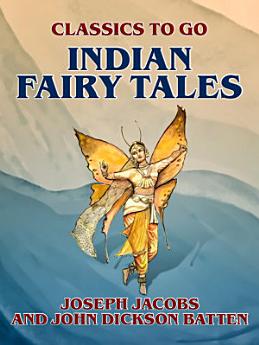
Indian Fairy Tales
jul. de 2020 · Otbebookpublishing
E-book
167
Páginas
family_home
Qualificado
info
Sobre este e-book
Excerpt: "From the extreme West of the Indo-European world, we go this year to the extreme East. From the soft rain and green turf of Gaeldom, we seek the garish sun and arid soil of the Hindoo. In the Land of Ire, the belief in fairies, gnomes, ogres and monsters is all but dead; in the Land of Ind it still flourishes in all the vigour of animism. Soils and national characters differ; but fairy tales are the same in plot and incidents, if not in treatment. The majority of the tales in this volume have been known in the West in some form or other, and the problem arises how to account for their simultaneous existence in farthest West and East. Some—as Benfey in Germany, M. Cosquin in France, and Mr. Clouston in England—have declared that India is the Home of the Fairy Tale, and that all European fairy tales have been [viii]brought from thence by Crusaders, by Mongol missionaries, by Gipsies, by Jews, by traders, by travellers. The question is still before the courts, and one can only deal with it as an advocate. So far as my instructions go, I should be prepared, within certain limits, to hold a brief for India. So far as the children of Europe have their fairy stories in common, these—and they form more than a third of the whole—are derived from India. In particular, the majority of the Drolls or comic tales and jingles can be traced, without much difficulty, back to the Indian peninsula."
Excerpt: "From the extreme West of the Indo-European world, we go this year to the extreme East. From the soft rain and green turf of Gaeldom, we seek the garish sun and arid soil of the Hindoo. In the Land of Ire, the belief in fairies, gnomes, ogres and monsters is all but dead; in the Land of ...
Saiba mais
Sobre o autor
Joseph Jacobs (1854-1916) was an influential folklorist, historian, and writer whose work has left an indelible mark on the study of folklore and fairy tales. Born in Sydney, Australia, Jacobs moved to England, where he became a pivotal figure in the British folklore movement. His academic journey took him through the University of Sydney, St. John's College, Cambridge, and the University of Berlin, where he studied under the renowned philologist, Theodor Benfey.Jacobs' contributions to literature are manifold. He was a prolific collector and editor of fairy tales, bringing to light many stories that might have otherwise faded into obscurity. His collections are celebrated for their accessibility and charm, making them beloved by both children and adults. Jacobs' work was not without controversy; he was often criticized for his liberal adaptations of traditional tales, which some purists felt strayed too far from their original forms. However, his approach also made these stories more engaging and relevant to contemporary audiences.Beyond his fairy tale collections, Jacobs was a respected historian and literary critic. He wrote extensively on Jewish history and culture, contributing significantly to the understanding of Jewish folklore and traditions. His scholarly rigor and dedication to cultural preservation have influenced countless contemporary writers and folklorists.Jacobs championed the idea that folklore is a living, evolving entity, reflecting the values and concerns of its time. This revolutionary perspective encouraged a more dynamic and inclusive approach to the study of folklore, paving the way for modern interpretations and adaptations. His legacy endures in the continued popularity of the tales he preserved and the scholarly methods he pioneered.
Joseph Jacobs (1854-1916) was an influential folklorist, historian, and writer whose work has left an indelible mark on the study of folklore and fairy tales. Born in Sydney, Australia, Jacobs moved to England, where he became a pivotal figure in the British folklore movement. His academic journe...
Avaliar este e-book
Diga o que você achou
Informações de leitura
Smartphones e tablets
Instale o app Google Play Livros para Android e iPad/iPhone. Ele sincroniza automaticamente com sua conta e permite ler on-line ou off-line, o que você preferir.
Laptops e computadores
Você pode ouvir audiolivros comprados no Google Play usando o navegador da Web do seu computador.
eReaders e outros dispositivos
Para ler em dispositivos de e-ink como os e-readers Kobo, é necessário fazer o download e transferir um arquivo para o aparelho. Siga as instruções detalhadas da Central de Ajuda se quiser transferir arquivos para os e-readers compatíveis.