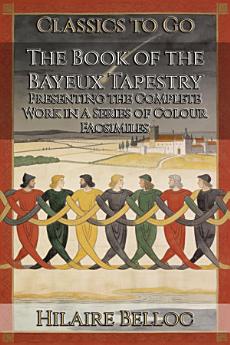
The Book of the Bayeux Tapestry: Restored Classics to Go Edition
About this ebook
Discover more
About the author
Hilaire Belloc was a prolific Anglo-French writer, historian, poet, essayist, and political thinker whose wide-ranging career made him one of the most distinctive literary voices of the early twentieth century. Born in France and later rooted in England, he brought to his work a rare blend of continental wit, Catholic conviction, historical imagination, and sharp public intelligence. Over the course of a remarkably productive life, he wrote poetry, travel writing, history, criticism, children's verse, satire, and reflective essays, earning a reputation for prose that could be at once elegant, combative, and deeply humane. He is especially remembered for his ability to make history vivid and accessible, whether through studies of medieval Europe, meditations on faith and culture, or richly observed accounts of landscapes and institutions. At the same time, his verse and essays reveal a writer preoccupied with memory, moral order, the pressures of modern life, and the fragility of civilization. Belloc's enduring significance lies in his conviction that literature should be both intellectually serious and alive to ordinary readers, and his work still speaks to contemporary concerns about identity, tradition, belief, and the uses of history in public life. Readers who enjoy spirited argument, lyrical prose, historical insight, and a strong, unmistakable authorial voice are likely to find him especially rewarding.