About this ebook
The argument is structural, not motivational. The hour on the alarm is a downstream variable. The upstream variables are sleep duration, chronotype alignment, and the structure of the prior evening. The contemporary morning-routine tradition has, for fifteen years, sold the downstream variable as the leverage point and produced a population of adults running chronic sleep restriction on schedules misaligned with their biology. The empirical literature has settled the question. The cultural narrative has not absorbed it.
The book cites the Van Dongen 2003 chronic sleep restriction study, the Roenneberg group's work on social jetlag, and Arnold Bennett's 1908 How to Live on 24 Hours a Day as the honest ancestor the 5am club tradition misread.
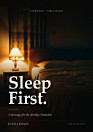
Visually enriched edition. This volume contains three commissioned line-art plates (frontispiece, midpoint, closing) plus per-chapter openers with motif glyphs, drop-initial typography on chapter one, numbers callouts (including the Van Dongen and Roenneberg findings rendered as visual punctuation), case vignettes, common-mistakes boxes, mini-FAQs, a quick-reference card at the back, and a templates appendix with three evening arrangements the reader can install tonight. The illustrations carry the book's central metaphor: an evening bedroom prepared for sleep, a defended morning that ended without an alarm, and a nightstand where the alarm clock has been retired.
What You Will Find
The Van Dongen 2003 result: six hours nightly for fourteen days produces cognitive deficits equivalent to two nights of total sleep deprivation, invisible from self-report
The Roenneberg social-jetlag finding: a 33 percent increase in overweight likelihood per hour of biological-social schedule mismatch
Why Bennett in 1908 located the productivity intervention in the evening, not the morning, and how the contemporary tradition inverted him
The two kinds of morning person the literature conflates, and how to tell which category you are in
A four-element low-friction first hour that works at any chronotype-aligned wake time
A Quick Reference Card and three evening templates the reader can install tonight
Who This Book Is For
Adults who tried the 5am schedule, hated it, gave up, and felt guilty
Adults who maintain the 5am schedule and notice nothing has changed
Evening chronotypes tired of being told they are broken
Practitioners who want their morning back without the ritual stack
Topics & Keywords
sleep, chronotype, morning routine critique, social jetlag, sleep restriction, circadian biology, productive mornings, Arnold Bennett, evening routine, anti-5am, sleep science, chronobiology
Discover more
Ratings and reviews
About the author
Ibrahim Anwar, known as Hibranwar, is an entrepreneur and writer working at the intersection of engineering, business, and content. He studied Dutch Literature at Universitas Indonesia and moved through sales, marketing, and operational leadership into running three companies across industrial pumps, engineering services, and handmade leather craft and publishing. He has produced hundreds of digital publications. His writing approach prioritizes direct, functional, structurally oriented prose over personal expression. ORCID: 0009-0006-0425-4923. He writes this book as an evening chronotype who spent a decade attempting the 5am schedule and eventually conceded to his biology, which is the experience the book documents.