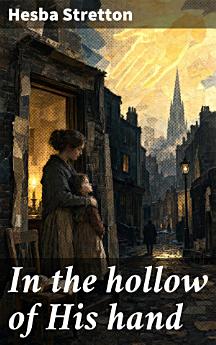
In the hollow of His hand
Hesba Stretton
Jun 2026 · Good Press
Ebook
120
Pages
family_home
Eligible
info
About this ebook
In the Hollow of His Hand is a characteristic work of Victorian evangelical fiction, combining domestic realism with spiritual exhortation. Hesba Stretton traces the trials of vulnerable lives under social and moral pressure, shaping a narrative in which providence, suffering, and redemption are intimately entwined. The prose is lucid, earnest, and affective, designed to move the conscience as much as the imagination. Like much nineteenth-century religious fiction, the book situates private hardship within a larger Christian vision, emphasizing dependence upon divine care and the consolations of faith amid instability. Hesba Stretton, the pen name of Sarah Smith, was one of the most influential popular writers of religious and philanthropic fiction in Victorian England. Deeply engaged with questions of poverty, child welfare, and urban distress, she wrote for a broad readership shaped by the era's reforming moral culture. Her experiences of evangelical activism and her concern for the poor strongly informed her fiction, giving it both emotional immediacy and a clear didactic purpose. This book is especially recommended to readers interested in Victorian religious literature, women's writing, and the intersection of fiction with social conscience. It rewards attention as both a moving story and a revealing document of nineteenth-century moral imagination.
In the Hollow of His Hand is a characteristic work of Victorian evangelical fiction, combining domestic realism with spiritual exhortation. Hesba Stretton traces the trials of vulnerable lives under social and moral pressure, shaping a narrative in which providence, suffering, and redemption are ...
Discover more
Rate this ebook
Tell us what you think.
Reading information
Smartphones and tablets
Install the Google Play Books app for Android and iPad/iPhone. It syncs automatically with your account and allows you to read online or offline wherever you are.
Laptops and computers
You can listen to audiobooks purchased on Google Play using your computer's web browser.
eReaders and other devices
To read on e-ink devices like Kobo eReaders, you'll need to download a file and transfer it to your device. Follow the detailed Help Center instructions to transfer the files to supported eReaders.