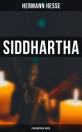
Siddhartha (Summarized Edition): Enriched edition. A Brahmin's son seeks nondual insight—from Samana austerities and sensual wealth to a ferryman's river and the sacred Om.
Jan 2026 · Quickie Classics
Ebook
72
Pages
family_home
Eligible
info
About this ebook
Siddhartha traces the inward odyssey of a Brahmin's son who abandons ritual certainties to test asceticism, sensuality, and finally the river's wordless wisdom alongside the ferryman Vasudeva. Hesse's prose is limpid, aphoristic, and incantatory, arranging scenes like stations of a parable while threading recurring symbols—river, smile, om—that bind multiplicity into unity. Composed in the early Weimar years (1922), the novel fuses the European Bildungsroman with Hindu-Buddhist ideas of nondual insight and cyclical time, addressing postwar disillusionment with institutional authority and the limits of doctrinal salvation. Hermann Hesse (1877–1962), a German-Swiss poet-novelist, grew up amid Pietist rigor and a household linked to Indian missions and Sanskrit literature, which gave him early access to the Upanishads and Buddhist texts. A 1911 voyage to Ceylon and the Malay Archipelago, and later psychoanalysis during a wartime crisis, deepened his concern with inner autonomy. Siddhartha distills this cross-cultural reading and self-analysis into a quietly radical pedagogy of experience. Recommended to readers of spiritual classics and modernist seekers alike, Siddhartha rewards slow reading. Its spare narrative invites reflection rather than assent, making it apt for courses in religion, philosophy, and world literature—or for any reader who suspects that wisdom lies beyond instruction, in lived attention. Quickie Classics summarizes timeless works with precision, preserving the author's voice and keeping the prose clear, fast, and readable—distilled, never diluted. Enriched Edition extras: Introduction · Synopsis · Historical Context · Author Biography · Brief Analysis · 4 Reflection Q&As · Editorial Footnotes.
Siddhartha traces the inward odyssey of a Brahmin's son who abandons ritual certainties to test asceticism, sensuality, and finally the river's wordless wisdom alongside the ferryman Vasudeva. Hesse's prose is limpid, aphoristic, and incantatory, arranging scenes like stations of a parable while ...
Discover more
Rate this ebook
Tell us what you think.
Reading information
Smartphones and tablets
Install the Google Play Books app for Android and iPad/iPhone. It syncs automatically with your account and allows you to read online or offline wherever you are.
Laptops and computers
You can listen to audiobooks purchased on Google Play using your computer's web browser.
eReaders and other devices
To read on e-ink devices like Kobo eReaders, you'll need to download a file and transfer it to your device. Follow the detailed Help Center instructions to transfer the files to supported eReaders.