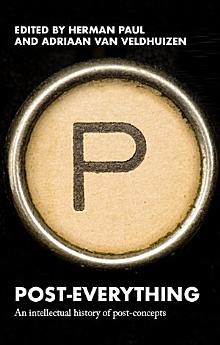
Post-everything: An intellectual history of post-concepts
Herman Paul · Adriaan van Veldhuizen
Jul 2021 · Manchester University Press
Ebook
272
Pages
Tools
info
About this ebook
Postmodern, postcolonial and post-truth are broadly used terms. But where do they come from? When and why did the habit of interpreting the world in post-terms emerge? And who exactly were the ‘post boys’ responsible for this?
Post-everything examines why post-Christian, post-industrial and post-bourgeois were terms that resonated, not only among academics, but also in the popular press. It delves into the historical roots of postmodern and poststructuralist, while also subjecting more recent post-constructions (posthumanist, postfeminist) to critical scrutiny.
This study is the first to offer a comprehensive history of post-concepts. In tracing how these concepts found their way into a broad range of genres and disciplines, Post-everything contributes to a rapprochement between the history of the humanities and the history of the social sciences.
An electronic edition of this book is freely available under a Creative Commons (CC BY-NC-ND) licence.
Postmodern, postcolonial and post-truth are broadly used terms. But where do they come from? When and why did the habit of interpreting the world in post-terms emerge? And who exactly were the ‘post boys’ responsible for this?
Post-everything examines why post-Christian, post-industrial and post...
Discover more
About the author
Herman Paul is Professor of the History of the Humanities at Leiden University
Adriaan van Veldhuizen is a scientific researcher for the Dutch government
Herman Paul is Professor of the History of the Humanities at Leiden University
Adriaan van Veldhuizen is a scientific researcher for the Dutch government
Rate this ebook
Tell us what you think.
Reading information
Smartphones and tablets
Install the Google Play Books app for Android and iPad/iPhone. It syncs automatically with your account and allows you to read online or offline wherever you are.
Laptops and computers
You can listen to audiobooks purchased on Google Play using your computer's web browser.
eReaders and other devices
To read on e-ink devices like Kobo eReaders, you'll need to download a file and transfer it to your device. Follow the detailed Help Center instructions to transfer the files to supported eReaders.