About this ebook
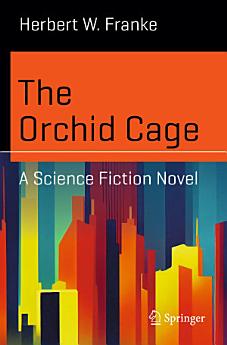
A dead city on a distant planet, two groups of people trying to explore it. Step by step, they penetrate the outer ring with its ultra-modern technology, the half-ruined medieval city center and finally the mysterious center. But is the eerie city really dead? Suddenly the factories start working again, the automatons intervene, and somewhere in the background there is still something hidden that could perhaps awaken. But is it people or machines? Herbert W. Franke leads the reader into an oppressively strange world; only after the startling resolution does it become clear what lies behind the adventures of the intruders - not a cosmic strangeness, but a threatening development that could affect humans in the same way. Franke's novel is thus a parable of the evolution of all humans in the age of technical communication ...
Discover more
About the author
Herbert W. Franke (1927-2022) was born in Vienna. He studied physics and philosophy there. In 1951 he received his doctorate in theoretical physics. Today Franke is known as the most important post-war German-language writer of the science fiction genre. In 2017, he was awarded the title "Grand Master of Science Fiction" by the European Science Fiction Association for his complete works. However, Franke is also recognized worldwide as a pioneer of algorithmic art. His intellectual work is based equally on the rationality of the researcher and the creativity of the artist – thus a pioneer of bridging art and science since the 1950s. He was particularly interested in creating aesthetically interesting structures with the help of computers. In addition to creating works of art, Franke has also been intensively involved in questions of rational aesthetics. In his "rational theory of art," published as early as the mid-1960s, he described the perception of art as a construct that can be grasped with the help of information theory. Since his student days, he has also worked as a speleologist and was the first to describe theoretically that stalagmites could be dated by the C14-method in 1952. Today, his method is well established and forms an important building block for climate research of the fading ice age; thus, Franke is also one of the pioneers of paleoclimatological research based on isotope measurements. In addition, Franke was also concerned with the aspect that a program should be sought to describe the physical world instead of a "world formula." Using cellular automata, he developed visualizations of different world models, addressing the question of the extent to which "real" chance plays a role in such a world program. He published these findings in a philosophical-theoretical book entitled "The P-Principle" in 1995. In 1980, the Austrian Ministry of Education and the Arts awarded him the professional title of Professor, and in 2007 he received the Austrian Cross of Honor for Science and the Arts 1st Class. In 2008, Franke was appointed Senior Fellow by the prestigious Zuse Institute Berlin ZIB. The research project "math goes art" initiated there investigated the interaction of mathematics and art, in particular in the context of three-dimensional worlds on the web. In 2018, he received an honorary doctorate from the University of Design in Karlsruhe. The first part of the archive Herbert W. Franke was given to the ZKM Center for Art and Media Karlsruhe in autumn 2017. It comprises about 22 linear meters of documents and about 50 books. The archive consists of documents, sketches, correspondence, typographical scripts, manuscripts, photographs, as well as sound and image recordings of his sixty years of activity in the field of art and science; it also displays his historic computers and programs. It reflects on the three major spheres of Franke's work: computer art, science fiction, and speleology, from the 1950s to the present day.