Walden
Jan 2021 · Otbebookpublishing
Ebook
388
Pages
family_home
Eligible
info
About this ebook
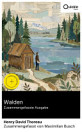
Walden oder Leben in den Wäldern (engl. Originaltitel Walden; or, Life in the Woods) – auch als Walden oder Hüttenleben im Walde erschienen – ist ein Buch des amerikanischen Schriftstellers Henry David Thoreau aus dem Jahr 1854 über sein zeitweiliges Leben als Aussteiger, das zum "Klassiker aller Alternativen" wurde. n Walden beschreibt Thoreau sein Leben in einer Blockhütte, die er sich 1845 in den Wäldern von Concord (Massachusetts) am See Walden Pond auf einem Grundstück seines Freundes Ralph Waldo Emerson baute, um dort für mehr als zwei Jahre der industrialisierten Massengesellschaft der jungen USA den Rücken zu kehren. Nach eigener Aussage ging es ihm dabei jedoch nicht um eine naive Weltflucht, sondern um den Versuch, einen alternativen und ausgewogenen Lebensstil zu verwirklichen.
Walden oder Leben in den Wäldern (engl. Originaltitel Walden; or, Life in the Woods) – auch als Walden oder Hüttenleben im Walde erschienen – ist ein Buch des amerikanischen Schriftstellers Henry David Thoreau aus dem Jahr 1854 über sein zeitweiliges Leben als Aussteiger, das zum "Klassiker aller...
About the author
Henry David Thoreau (1817-1862) was an American essayist, poet, and philosopher, best known for his transcendentalist beliefs and his advocacy for civil disobedience. Born in Concord, Massachusetts, Thoreau was a Harvard graduate who chose to live simply and in close communion with nature, which greatly influenced his writing and philosophy.Thoreau's most revolutionary idea was his staunch belief in individual conscience over societal norms, a stance that led him to famously refuse to pay a poll tax in protest against slavery and the Mexican-American War. This act of defiance resulted in a brief imprisonment, which he eloquently detailed in his essay "Civil Disobedience." This work has since inspired countless activists, including Mahatma Gandhi and Martin Luther King Jr., cementing Thoreau's legacy as a pioneer of nonviolent resistance.Thoreau's deep connection to nature and his minimalist lifestyle resonate strongly with modern environmental movements. His writings emphasize the importance of preserving the natural world and living sustainably, ideas that are increasingly relevant in today's context of climate change and ecological degradation.Despite his significant contributions, Thoreau was often a controversial figure in his time, criticized for his perceived aloofness and radical views. However, his profound insights into human nature, society, and the environment have earned him a lasting place in American literature and philosophy. His influence extends to contemporary writers and thinkers who continue to draw inspiration from his quest for truth and simplicity.
Henry David Thoreau (1817-1862) was an American essayist, poet, and philosopher, best known for his transcendentalist beliefs and his advocacy for civil disobedience. Born in Concord, Massachusetts, Thoreau was a Harvard graduate who chose to live simply and in close communion with nature, which ...
Rate this ebook
Tell us what you think.
Reading information
Smartphones and tablets
Install the Google Play Books app for Android and iPad/iPhone. It syncs automatically with your account and allows you to read online or offline wherever you are.
Laptops and computers
You can listen to audiobooks purchased on Google Play using your computer's web browser.
eReaders and other devices
To read on e-ink devices like Kobo eReaders, you'll need to download a file and transfer it to your device. Follow the detailed Help Center instructions to transfer the files to supported eReaders.