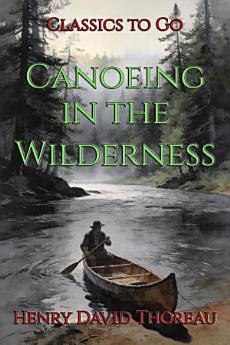
Canoeing in the Wilderness: Restored Classics to Go Edition

· Otbebookpublishing
Ebook
136
Pages
Eligible

About this ebook

Canoeing in the Wilderness follows Henry David Thoreau's third journey into the Maine woods in July 1857, beginning with his search in Oldtown for an Indian guide and his hiring of Joseph Polis, a steady, independent woodsman whose quiet reserve fascinates him. From a rain-soaked stagecoach crowded with hunters, guns, a dog, and even a canoe strapped overhead, Thoreau is carried toward Moosehead Lake, where the practical realities of wilderness travel quickly replace any romantic notion of adventure. Once on the water, the book becomes a vivid record of canoeing through mist, wind, and uncertainty, where a small craft feels as fragile as an eggshell and every mile demands caution, endurance, and constant observation. Thoreau records birds, plants, shore signs, camp chores, and the subtle differences between white chatter and Indian silence, while also sharing language lessons, stories, and moments of mutual respect with Polis. The journey ranges from Mount Kineo and its legendary moose tale to muddy carries, black flies, swamp crossings, and the comic miseries of getting lost. Along the way, Thoreau finds in the northern wilderness both hardship and grandeur, ending in a landscape of deep forest, storm light, and hard-won beauty. This edition has been fully restored with modern typesetting, custom cover design.
Canoeing in the Wilderness follows Henry David Thoreau's third journey into the Maine woods in July 1857, beginning with his search in Oldtown for an Indian guide and his hiring of Joseph Polis, a steady, independent woodsman whose quiet reserve fascinates him. From a rain-soaked stagecoach crowd...

Discover more

About the author

Henry David Thoreau was an American essayist, naturalist, philosopher, and transcendentalist whose life was shaped by a deep commitment to simplicity, self-reliance, and close observation of the natural world. Born in Concord, Massachusetts, he studied at Harvard, worked in education and writing, and spent much of his life walking the woods, rivers, and fields around his hometown, experiences that became the foundation of his enduring literary voice. He is best remembered for writing with uncommon clarity and moral force about the relationship between the individual and society, the value of solitude, the discipline of living deliberately, and the spiritual and practical lessons found in nature. His work often blends memoir, social criticism, and natural description, and it continues to resonate in an age marked by environmental concern, consumer excess, and the search for a more meaningful life. Thoreau's legacy lies not only in his influence on American literature but also in his role as an early voice for environmental awareness, civil disobedience, and personal conscience, ideas that still inspire readers, activists, and thinkers today. He remains especially rewarding for readers who love nature writing, reflective prose, and books that challenge them to examine how they live.
Henry David Thoreau was an American essayist, naturalist, philosopher, and transcendentalist whose life was shaped by a deep commitment to simplicity, self-reliance, and close observation of the natural world. Born in Concord, Massachusetts, he studied at Harvard, worked in education and writing,...

Rate this ebook

Tell us what you think.

Reading information

Smartphones and tablets
Install the Google Play Books app for Android and iPad/iPhone. It syncs automatically with your account and allows you to read online or offline wherever you are.
Laptops and computers
You can listen to audiobooks purchased on Google Play using your computer's web browser.
eReaders and other devices
To read on e-ink devices like Kobo eReaders, you'll need to download a file and transfer it to your device. Follow the detailed Help Center instructions to transfer the files to supported eReaders.