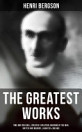
Time and Free Will: Restored Classics to Go Edition

· Otbebookpublishing
Ebook
294
Pages
Eligible

About this ebook

Henri Bergson's Time and Free Will opens with a bold challenge to the habits of ordinary thought: we mistake the living flow of consciousness for something fixed, measurable, and spatial. Guided by the classical spirit of Plotinus, Bergson invites readers into a more intuitive philosophy of lived time, where duration is qualitative, the self is not mechanical, and freedom can be understood at its deepest level. This influential essay argues that many disputes about free will arise from a basic confusion between time and space, succession and simultaneity, quality and quantity. Bergson examines whether sensations, feelings, and efforts can truly be measured, then develops his distinction between quantitative multiplicity and the inner continuity of experience. Against both physical and psychological determinism, he defends freedom as real, rooted in the deeper self rather than abstract clock time. Surrounding the text is a rich scholarly record that shows Bergson's wide-reaching influence. His ideas on intuition, memory, creativity, evolution, religion, realism, laughter, and the philosophy of action sparked vigorous debate across France, Britain, the United States, Europe, and Latin America, drawing philosophers, psychologists, theologians, critics, and literary thinkers into a lasting and contested conversation. This edition has been fully restored with modern typesetting, custom cover design.
Henri Bergson's Time and Free Will opens with a bold challenge to the habits of ordinary thought: we mistake the living flow of consciousness for something fixed, measurable, and spatial. Guided by the classical spirit of Plotinus, Bergson invites readers into a more intuitive philosophy of lived...

About the author

Henri Bergson was a French philosopher and writer born in 1859 in Paris, whose ideas helped reshape modern thought at the turn of the twentieth century. Educated at the École Normale Supérieure, he went on to teach, lecture widely, and become one of the most influential intellectual figures of his era, eventually receiving the Nobel Prize in Literature in 1927 for the power and originality of his philosophical writing. Bergson's work challenged rigid, mechanical ways of understanding human life by emphasizing lived experience, intuition, memory, creativity, and the fluid nature of time. He argued that consciousness cannot be fully captured by scientific measurement alone, and his reflections on freedom, perception, and becoming opened new paths for philosophy, psychology, literature, and even art. His central themes remain strikingly relevant today, especially in a world that often treats people as data points or reduces experience to speed and efficiency; Bergson reminds us that inner life is richer, more continuous, and more mysterious than simple categories allow. His legacy endures because he gave readers a language for thinking about change, choice, and the texture of experience itself. Modern readers interested in philosophy, the mind, creativity, or the meaning of time will find him especially rewarding.


Henri Bergson was a French philosopher and writer born in 1859 in Paris, whose ideas helped reshape modern thought at the turn of the twentieth century. Educated at the École Normale Supérieure, he went on to teach, lecture widely, and become one of the most influential intellectual figures of hi...

Rate this ebook

Tell us what you think.

Reading information

Smartphones and tablets
Install the Google Play Books app for Android and iPad/iPhone. It syncs automatically with your account and allows you to read online or offline wherever you are.
Laptops and computers
You can listen to audiobooks purchased on Google Play using your computer's web browser.
eReaders and other devices
To read on e-ink devices like Kobo eReaders, you'll need to download a file and transfer it to your device. Follow the detailed Help Center instructions to transfer the files to supported eReaders.