About this ebook
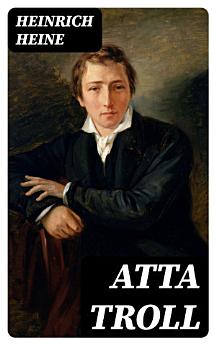
Heinrich Heine's 'Atta Troll' stands as a formidable entry in the canon of satirical verse, a poem brimming with the philosophical and political ironies of the nineteenth century. As a mock-epic, it expertly fuses an intricate allegory with Heine's characteristic lyricism and sharp wit, targeting the myopia of contemporary radical poets. The titular character, Atta Troll, serves as a vessel for ridiculing the shortsighted ideals Heine saw threatening the intellectual landscape of his time, such as a na"ive concept of equality and a self-serving religiosity, which is cleverly portrayed through the character's envisioning of the divine as a celestial iteration of his ursine form. The tale's progression, following the pursuit of the anthropomorphized bear and his offspring, is a deft exemplation of the author's skepticism towards burgeoning nationalistic fervor. Heine's own odyssey as a poet and essayist, entwined with the social turmoil and intellectual upheaval of his era, certainly informed the satiric bite of 'Atta Troll.' A figure of the Young Germany movement, Heine was an ambivalent observer of the revolutions that upended Europe, critical of both reactionary conservatism and the pitfalls of radical zeal. This dichotomy in his worldview sows the seeds from which 'Atta Troll' sprouts, instilling the poem with the existential nuances that define his oeuvre. In crafting this work, Heine not only addresses specific figures like Freiligrath but enacts a broader critique of the era's poetics and politics, coded in the movements of a fugitive bear. Given its historical significance and literary vigor, 'Atta Troll' is a must-read for admirers of satirical literature and scholars of the Romantic period alike. The poem not only offers a glimpse into the literary battles of Heine's time but also serves as a timeless commentary on the human condition. Readers will appreciate Heine's blend of humor and philosophical depth, which, together with the text's rhythmic elegance, make 'Atta Troll' an enriching experience resonant with modernity's complex dialogues.
Heinrich Heine's 'Atta Troll' stands as a formidable entry in the canon of satirical verse, a poem brimming with the philosophical and political ironies of the nineteenth century. As a mock-epic, it expertly fuses an intricate allegory with Heine's characteristic lyricism and sharp wit, targeting...
About the author
Heinrich Heine was a pivotal figure in German literature, known for his lyric poetry, essays, and literary critique. Born on December 13, 1797, in Düsseldorf, then part of the Duchy of Berg, Heine grew into an acute observer of both the romantic spirit of his time and the political upheavals that prefigured modern Europe. His Jewish heritage and later conversion to Protestantism played significant roles in shaping his outsider's perspective on German society and politics. Notable for a blending of romance, irony, and satire, Heine's work often took aim at the social injustices of his day. 'Atta Troll' is one such work, an epic poem which satirizes the nationalist and conservative sentiments prevalent in Germany during Heine's lifetime. Published in 1843, 'Atta Troll' is characterized by its ingenious use of verse and fairy-tale motifs to lampoon contemporary issues, showcasing Heine's skill in mixing the poetic with the political. Heine's literary style has been credited with influencing the development of German Romanticism, and his works remain a study point for scholars exploring the intersections of literature, society, and politics during the 19th century. Heine's intellectual legacy endures through the continued relevance of his literary productions and social commentary, maintaining his status as a crucial voice in world literature. He died in Paris on February 17, 1856, having spent the latter part of his life in exile due to his radical political views.
Heinrich Heine was a pivotal figure in German literature, known for his lyric poetry, essays, and literary critique. Born on December 13, 1797, in Düsseldorf, then part of the Duchy of Berg, Heine grew into an acute observer of both the romantic spirit of his time and the political upheavals that...
Rate this ebook
Tell us what you think.
Reading information
Smartphones and tablets
Install the Google Play Books app for Android and iPad/iPhone. It syncs automatically with your account and allows you to read online or offline wherever you are.
Laptops and computers
You can listen to audiobooks purchased on Google Play using your computer's web browser.
eReaders and other devices
To read on e-ink devices like Kobo eReaders, you'll need to download a file and transfer it to your device. Follow the detailed Help Center instructions to transfer the files to supported eReaders.