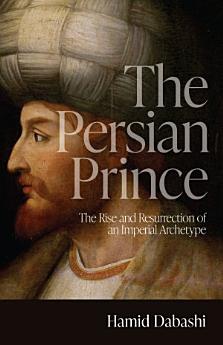
The Persian Prince: The Rise and Resurrection of an Imperial Archetype

· Stanford University Press
Ebook
352
Pages
Tools
Eligible

About this ebook

With its title borrowed from Machiavelli, The Persian Prince goes far beyond Machiavelli's wildest imagination as to how to rule the world. Hamid Dabashi articulates a bold new idea of the Persian Prince—a metaphor of political authority, a figurative ideal deeply rooted in the collective memories of multiple nations, and a literary construct that connected Muslim empires across time and space and continues to inform political debate today.

Drawing on works from Classical Antiquity and the vast Persianate worlds from India to the Mediterranean, as well as the Hebrew Bible and European medieval mirrors for princes, Dabashi engages a diverse body of political thought to reveal the construction of the Persian Prince as a potent archetype. He traces this archetype through its varied historic gestations and finds it resurfacing in postcolonial political thought as a rebel, a prophet, a poet, and a nomad. Bringing poetics and politics together, Dabashi shows how this archetypal figure has long defined political authority throughout the wider Iranian and Islamic worlds.

With meticulous attention to literary and poetic texts, moral and philosophical treatises, allegorical and anecdotal stories, sacred and secular evidence, visual and performing arts, histories of global empires and colonial conquests, this sweeping work offers a deeply learned, richly erudite, and transformative piece of critical thinking. As Dabashi shows, the Persian Prince remains the stuff of current debate across the Muslim and Persianate worlds, in contestations over the public domain and the collective will to power, and above all in the prospects of democratic institutions.
With its title borrowed from Machiavelli, The Persian Prince goes far beyond Machiavelli's wildest imagination as to how to rule the world. Hamid Dabashi articulates a bold new idea of the Persian Prince—a metaphor of political authority, a figurative ideal deeply rooted in the collective memorie...

Discover more

About the author

Hamid Dabashi is the Hagop Kevorkian Professor of Iranian Studies and Comparative Literature at Columbia University. He is the author of more than two dozen books, including The End of Two Illusions: Islam after the West (2022) and Iran: A People Interrupted (2007).

Rate this ebook

Tell us what you think.

Reading information

Smartphones and tablets
Install the Google Play Books app for Android and iPad/iPhone. It syncs automatically with your account and allows you to read online or offline wherever you are.
Laptops and computers
You can listen to audiobooks purchased on Google Play using your computer's web browser.
eReaders and other devices
To read on e-ink devices like Kobo eReaders, you'll need to download a file and transfer it to your device. Follow the detailed Help Center instructions to transfer the files to supported eReaders.