Introduction to Applied Geophysics: Exploring the Shallow Subsurface

· ·
· Cambridge University Press
1 review
Ebook
623
Pages

About this ebook

Introduction to Applied Geophysics covers the fundamental methods of exploration geophysics in a depth and style both challenging and appropriate to undergraduates. Because of the increasing opportunities for students to conduct field experiments, the authors focus on methods, examples, illustrations, applications, and problem sets that emphasize shallow exploration of the Earth's surface. The textbook includes chapters on refraction seismology, electrical resistivity methods, gravity, magnetic surveying, and electromagnetic methods, including ground conductivity measurements and ground-penetrating radar. Geologic, engineering, and environmental applications are emphasized throughout. For each geophysical method, the theory and its application in exploring a given target in introduced. Each chapter includes a brief discussion of the applicable instruments, field operations, data collection and reduction, and limitations on interpretation. The textbook is supported by an extensive package of software. This edition from Cambridge University Press is a re-issue of the W.W. Norton edition, first published in 2006.
Introduction to Applied Geophysics covers the fundamental methods of exploration geophysics in a depth and style both challenging and appropriate to undergraduates. Because of the increasing opportunities for students to conduct field experiments, the authors focus on methods, examples, illustrat...

Discover more

Ratings and reviews

1 review

About the author

H. Robert Burger is Achilles Professor Emeritus of in the Department Geosciences at Smith College. He is a structural geologist with research interests in comparison of the structural evolution of Death Valley and the Connecticut Valley and geophysical imaging of the Connecticut Valley structure.

Anne F. Sheehan is Director of the Cooperative Institute for Research in Environmental Sciences and a Professor in the Department of Geological Sciences at the University of Colorado, Boulder. Her research group addresses problems in earthquake seismology, tsunami studies, active tectonics, and geophysical imaging of the subsurface.

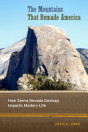
Craig H. Jones is a Professor in the Department of Geological Sciences at the University of Colorado, Boulder. His main research interest is in the origin of mountains and elevated topography in continents, primarily in the western U.S. As well as the current textbook, he is the author of The Mountains that Remade America: How Sierra Nevada Geology Impacts Modern Life (University of California Press, 2017).
H. Robert Burger is Achilles Professor Emeritus of in the Department Geosciences at Smith College. He is a structural geologist with research interests in comparison of the structural evolution of Death Valley and the Connecticut Valley and geophysical imaging of the Connecticut Valley structure....

Rate this ebook

Tell us what you think.

Reading information

Smartphones and tablets
Install the Google Play Books app for Android and iPad/iPhone. It syncs automatically with your account and allows you to read online or offline wherever you are.
Laptops and computers
You can listen to audiobooks purchased on Google Play using your computer's web browser.
eReaders and other devices
To read on e-ink devices like Kobo eReaders, you'll need to download a file and transfer it to your device. Follow the detailed Help Center instructions to transfer the files to supported eReaders.