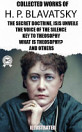
The Secret Doctrine: Restored Classics to Go Edition
About this ebook
Discover more
About the author
Helena Petrovna Blavatsky, better known as H. P. Blavatsky, was a Russian-born writer, traveler, and spiritual thinker whose restless life took her across Europe, Asia, and the Americas before she emerged as one of the most influential esoteric figures of the nineteenth century. Born in 1831 and shaped by a cosmopolitan upbringing, she became a co-founder of the Theosophical Society in 1875, helping to spark a worldwide movement that sought wisdom beyond the boundaries of conventional religion and material science. Her major writings made her famous for ambitious attempts to compare ancient traditions, occult philosophy, comparative religion, and modern thought, and she became especially known for presenting a vast, controversial vision of human evolution, hidden knowledge, and the unity behind diverse spiritual teachings. Blavatsky's work is marked by themes of spiritual inquiry, the search for universal truth, karma, reincarnation, and the idea that humanity is part of a larger cosmic order, ideas that continue to resonate with readers interested in mysticism, philosophy, and alternative ways of understanding consciousness. Though fiercely debated in her own time and still viewed critically by some, her influence on modern esotericism, New Age spirituality, and comparative religious studies remains undeniable. Today, she matters as a bold, original thinker who challenged the limits of accepted knowledge and invited readers to ask larger questions about reality, meaning, and the unseen. Readers drawn to spiritual philosophy, occult history, comparative religion, and intellectually adventurous writing are most likely to enjoy her work.