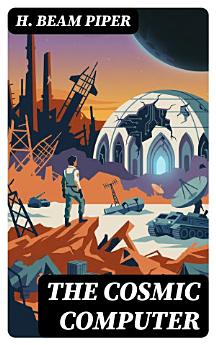
The Cosmic Computer: Enriched edition. A Post-Apocalyptic Quest for a Mythical Supercomputer Amid Political Intrigue and Humanity vs AI
H. Beam Piper
Nov 2022 · DigiCat
Ebook
178
Pages
family_home
Eligible
info
About this ebook
In "The Cosmic Computer," H. Beam Piper masterfully interweaves elements of science fiction and socio-political commentary to explore the complex relationship between technology and humanity. Set in a post-apocalyptic future, the narrative follows the journey of a bright yet underappreciated protagonist, who seeks the legendary Computer that purportedly controls vast knowledge and power. Piper's intricate plotting, vivid world-building, and sharp dialogue reflect the rich literary traditions of Golden Age science fiction while also engaging with contemporary concerns regarding the reliance on technology and the fundamental questions of intelligence and governance. H. Beam Piper, a key figure of mid-20th-century science fiction, crafted narratives that often echo his own fascination with both technology and history. His diverse background, which included being a veteran of World War II and a keen observer of the shifting societal landscape, infused his writing with a sense of realism and urgency. Piper's commitment to exploring the boundaries of human potential and ethical dilemmas is truly evident in this work, as he presents a future that resonates with both hope and caution. For readers interested in a thought-provoking exploration of advanced technology and its implications, "The Cosmic Computer" is a must-read. Piper's compelling prose and deep insights into human nature will captivate fans of speculative fiction and critical theorists alike, inviting them to contemplate the moral landscape of their own technological realities. In this enriched edition, we have carefully created added value for your reading experience: - A succinct Introduction situates the work's timeless appeal and themes. - The Synopsis outlines the central plot, highlighting key developments without spoiling critical twists. - A detailed Historical Context immerses you in the era's events and influences that shaped the writing. - A thorough Analysis dissects symbols, motifs, and character arcs to unearth underlying meanings. - Reflection questions prompt you to engage personally with the work's messages, connecting them to modern life. - Hand‐picked Memorable Quotes shine a spotlight on moments of literary brilliance. - Interactive footnotes clarify unusual references, historical allusions, and archaic phrases for an effortless, more informed read.
In "The Cosmic Computer," H. Beam Piper masterfully interweaves elements of science fiction and socio-political commentary to explore the complex relationship between technology and humanity. Set in a post-apocalyptic future, the narrative follows the journey of a bright yet underappreciated prot...
Discover more
About the author
H. Beam Piper was an acclaimed American science fiction writer renowned for his expansive imagination and intricate narratives that often delved into the themes of alternate history, societal development, and the nature of civilization. Born on March 23, 1904, in Altoona, Pennsylvania, Piper's career spanned from the 1940s until his untimely death in 1964. His early works were heavily influenced by his deep interest in history and archaeology. The Cosmic Computer, originally published as 'Junkyard Planet', is one of Piper's most well-regarded works, epitomizing his flair for combining post-apocalyptic settings with rigorous sociopolitical frameworks. This novel, like many of his others, reflects Piper's interest in the rise and fall of cultures and the role of technology in human societies. Piper's contributions to science fiction include other notable titles like 'Little Fuzzy', which was nominated for the 1963 Hugo Award for Best Novel, and his celebrated Paratime series. Committed to exploring complex ideas with an accessible narrative voice, Piper's literary style is characterized by its focus on logic, love of lore, and an understanding of human nature. Despite his suicide at a relatively early age, Piper left behind a legacy that has influenced a generation of science fiction writers and continues to entertain readers with its timeless appeal.
H. Beam Piper was an acclaimed American science fiction writer renowned for his expansive imagination and intricate narratives that often delved into the themes of alternate history, societal development, and the nature of civilization. Born on March 23, 1904, in Altoona, Pennsylvania, Piper's ca...
Rate this ebook
Tell us what you think.
Reading information
Smartphones and tablets
Install the Google Play Books app for Android and iPad/iPhone. It syncs automatically with your account and allows you to read online or offline wherever you are.
Laptops and computers
You can listen to audiobooks purchased on Google Play using your computer's web browser.
eReaders and other devices
To read on e-ink devices like Kobo eReaders, you'll need to download a file and transfer it to your device. Follow the detailed Help Center instructions to transfer the files to supported eReaders.