ഈ ഇ-ബുക്കിനെക്കുറിച്ച്
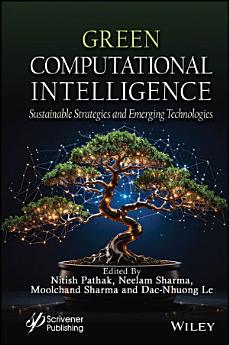
The global pursuit of sustainability has placed an urgent emphasis on developing innovative and eco-friendly technological solutions. Green computing has the potential to revolutionize the way we evaluate sustainability with the use of energy-efficient algorithms for resource optimization, sustainable hardware design, and smart resource management. Recognizing the intersection of computational intelligence and environmental stewardship, this book seeks to address the pressing challenges of integrating green practices into the realm of computational intelligence and aligning them with global sustainable development goals. Through global expertise from researchers and industry professionals, this book comprehensively covers the many applications of these innovative new technologies, as well as the challenges surrounding their implementation.
Readers will find the book:
- Explores the convergence of environmental sustainability and advanced computational techniques, addressing the global call for energy-efficient and eco-friendly technological solutions;
- Integrates perspectives from computer science, engineering, environmental science, and artificial intelligence, providing a holistic view of green computing;
- Examines sustainable practices across diverse topics, including energy-efficient algorithms and resource optimization, sustainable hardware design, green software engineering, eco-friendly data centers, and smart resource management;
- Offers practical strategies for implementing sustainable computing practices while addressing theoretical and practical challenges;
- Highlights the role of computational intelligence in promoting sustainability, bridging the gap between technology development and environmental conservation.
Audience
Researchers, students, educators, and industry professionals working towards sustainable practices in and using green technology.
കൂടുതൽ കണ്ടെത്തൂ
രചയിതാവിനെ കുറിച്ച്
Nitish Pathak, PhD is an associate professor in the Department of Computer Science and Engineering, the Bhagwan Parshuram Institute of Technology, Guru Gobind Singh Indraprastha University, New Delhi, India with over 19 years of teaching experience. He has authored and edited over ten books and published over 125 articles in international journals, conferences, patents, and book chapters. His research interests include intelligent computing techniques, empirical software engineering, trusted operating systems, cloud computing, the IoT, and artificial intelligence.
Neelam Sharma, PhD is a senior assistant professor in the Maharaja Agrasen Institute of Technology, Guru Gobind Singh Indraprastha University, New Delhi, India with over 19 years of teaching experience. She has published over 95 papers in international journals, conferences, patents, and book chapters. Her research focuses on wireless sensor networks, wireless body area networks, mobile communications, AI, IoT, information security, and computer graphics.
Moolchand Sharma, PhD is an assistant professor in the Department of Computer Science and Engineering at the Maharaja Agrasen Institute of Technology, Guru Gobind Singh Indraprastha University, New Delhi, India. He has published four books and several book chapters, as well as numerous scientific research publications in reputed international journals and conferences. His research areas include artificial intelligence, nature-inspired computing, security in cloud computing, machine learning, and search engine optimization.
Dac-Nhuong Le, PhD is an associate professor of Computer Science and Dean of the Faculty of Information Technology at Haiphong University, Vietnam with over 20 years of teaching experience. He has authored and edited over 35 books and numerous articles in international journals and conferences. His areas of research include soft computing, network communication, security and vulnerability, network performance analysis and simulation, cloud computing, IoT, and image processing for biomedicine.