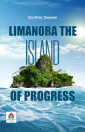
Limanora : the island of progress
Godfrey Sweven
Jun 2026 · Good Press
Ebook
562
Pages
family_home
Eligible
info
About this ebook
Godfrey Sweven's Limanora: the Island of Progress is a late-Victorian utopian romance that imagines an ordered island society as a vehicle for social, political, and moral speculation. Combining narrative travel fiction with the reflective habits of reformist literature, the book belongs to the tradition of ideal commonwealth writing associated with Edward Bellamy and William Morris, yet it retains a distinctive fin-de-siècle fascination with progress, administration, and civilization. Its style is lucid and didactic without surrendering entirely to imaginative appeal; dialogue, description, and institutional detail work together to present Limanora less as fantasy than as a serious model for thought. Sweven, a pseudonymous and still somewhat elusive figure, wrote at a moment when debates over social improvement, imperial modernity, and the future of democratic society were especially intense. That intellectual climate helps explain the book's programmatic character. Like many utopian writers of his era, he appears motivated less by escapism than by critique: the invented island becomes a controlled setting in which the deficiencies of contemporary society may be measured against an alternative social design. This is a rewarding text for readers interested in utopian fiction, the history of political imagination, and late nineteenth-century literary culture. Limanora deserves attention not only as a period curiosity, but as a thoughtful meditation on what "progress" might truly mean.
Godfrey Sweven's Limanora: the Island of Progress is a late-Victorian utopian romance that imagines an ordered island society as a vehicle for social, political, and moral speculation. Combining narrative travel fiction with the reflective habits of reformist literature, the book belongs to the t...
Discover more
Rate this ebook
Tell us what you think.
Reading information
Smartphones and tablets
Install the Google Play Books app for Android and iPad/iPhone. It syncs automatically with your account and allows you to read online or offline wherever you are.
Laptops and computers
You can listen to audiobooks purchased on Google Play using your computer's web browser.
eReaders and other devices
To read on e-ink devices like Kobo eReaders, you'll need to download a file and transfer it to your device. Follow the detailed Help Center instructions to transfer the files to supported eReaders.