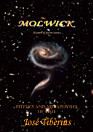
Global Mechanics and Astrophysics: Global Physics
ఈ ఇ-పుస్తకం గురించి
“Global Mechanics and Astrophysics” brings together two Volumes of the “Global Physics” series. Although they address different scales—one microscopic, the other cosmic—they converge on a single objective: to provide a coherent physical structure capable of explaining phenomena that modern physics still treats as mathematical abstractions or unresolved enigmas.
If any part of the book feels unclear, copy the full section or chapter and ask a modern AI to explain it calmly. A fragment alone may lose context, but a complete section often reveals surprisingly clear answers.
Content
The first book, “Global Mechanics”, examines the physical principles underlying the structure of matter. It proposes that ordinary matter and mass exist as real physical entities, independent of any observer, and that all forces—gravitational, electromagnetic, or nuclear—require material support. Without such support, they would be nothing more than mathematical magic.
· The book explores the gravitational field as the physical substrate of electromagnetic energy, the mechanism of mass creation through gravitational and electromagnetic interaction, and a new atomic theory capable of explaining the Pauli principle, tunneling, spin, entanglement, and stability of electrons in the atom.
The Global Atom model also proposes an electronic configuration compatible with chemical bonding, offering a unified and intuitive reinterpretation of Quantum Mechanics and General Relativity.
The second book, “Global Astrophysics and Cosmology”, extends this physical reinterpretation to the largest scales of the universe. It presents carefully considered ideas in which nuclear fusion near stars and black holes is the true driver of cosmic expansion, eliminating the need for dark energy. It questions the Big Bang Theory based on recent measurements of cosmic expansion.
· The Dolphin paradox and the variability of the gravitational constant G are explored as indicators that both Global Physics and General Relativity may be incomplete.
· The book also introduces UMBRELLA, a conceptual cluster representing the current set of unknowns in modern astrophysics.
Conclusions
Together, these two volumes form a single intellectual experiment: a journey through the physical structure of matter and the cosmic architecture of the universe. They belong to Global Physics, a broader project that attempts to illuminate the 95% of matter and energy that contemporary theories still cannot explain.
మరిన్ని కనుగొనండి
రచయిత పరిచయం
José Tiberius - Biographical Note
He is one of the main authors of Editorial Molwick. His books in Spanish have been translated into English, French, Italian, and Portuguese.
Molwick Stories
He is the author of seven short stories for children and adults, accompanied by an introduction that explains their emotional features and educational purpose.
• “Molwick Stories”
Style and Scientific Method
His proposals follow the scientific method in its purest form, both in the formulation of hypotheses and in the requirements of coherence, reproducibility, and compatibility with evidence. His theories do not contradict any experimentally verified scientific results and avoid metaphors such as “live and dead cats” because of their technical connotations in popular science books.
• “The Global Scientific Method”
This work reached more than 6,000 daily visits on molwick.com at its peak.
Metaphysics
In addition to his theoretical corpus on Global Physics, he is the author of two books on metaphysics in which he establishes unusual, complex, and subtly provocative mathematical associations related to Modern Physics, which have been reviewed by physicists and taken seriously.
• “The Equation of Love”
• “Relativity Theory: Elements and Critique” •• “Physics and Metaphysics of Time”
Global Physics
He has also developed extensive work in physics and astrophysics aimed at describing the structure of space, gravity, and the dynamics of motion through a coherent mathematical framework. His work is characterized by a clear, structured approach that has enabled him to explore fundamental questions about the universe's configuration.
• “Global Mechanics”
• “Global Astrophysics and Cosmology” •• “Global Mechanics and Astrophysics”
• “Global Dynamics”
• “The Global Law of Gravity”
• “Global Physics Experiments”
You may discuss his books with any modern AI; they usually have interesting observations.
Bibliographic Note — Molwick Publishers
Museum of the Science of the Future
Molwick is a publishing house dedicated to disseminating scientific knowledge in fields such as evolutionary theory, theoretical physics, functional neuroscience, and humanistic literature. Its catalog brings together works that combine conceptual rigor, clarity of exposition, and a functional approach to major contemporary scientific problems.
Catalog and International Reach
Most of its books, originally written in Spanish, have been translated into English, French, Italian, and Portuguese, bringing the total to more than one hundred titles.
Any modern AI can easily help you place any of Molwick’s books within the context of current scientific knowledge.
Historical Recognition and Readership
Over more than two decades, Molwick’s works have received more than 40 million visits and 2 million PDF downloads, making them among the most widely read original scientific publications in Spanish in the twenty‑first century.
In the early years of the Internet, Molwick’s books accumulated more than 20,000 external links from universities, student papers, education‑related blogs, and reference pages. In most cases, these links appeared alongside references to Wikipedia or outlets such as National Geographic, reflecting the academic and outreach context in which the publisher was cited. The Wayback Machine and other historical Internet archives verify all this information.
Recent Developments and Scientific Engagement
Recently, its 2026 book “Synthetic Theory of Neuronal Dysfunctions”, in both Spanish and English, was accepted and included in the “files” section of more than 100 Facebook groups dedicated to neuroscience, Alzheimer’s disease and other dementias, with more than 6.000,000 members. In more than 50% of those groups, it is currently the only book included, confirming strong, rapid interest in prevention and early-stage approaches.
We remain committed to coherence and accessibility, while exploring innovative ideas without sacrificing clarity or depth.