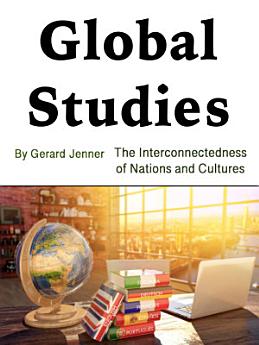
Global Studies: The Interconnectedness of Nations and Cultures

Freegulls Publishing House
Ebook
26
Pages
Tools
Eligible

About this ebook

The shipping containers stacked twenty stories high at the Port of Shanghai created a metallic mountain range against the dawn sky, each box containing goods destined for markets thousands of miles away while representing threads in a global web of production, consumption, and exchange that connects factories in China with consumers in São Paulo, Lagos, and Detroit. Dr. Li Wei, an economist studying global supply chains, calculated that a single smartphone contained components from over thirty countries while its journey from conception to consumer involved designers in California, manufacturers in Shenzhen, rare earth miners in Congo, and retail workers in Mumbai, demonstrating how everyday objects embody the complex interdependencies that define contemporary globalization.

Globalization represents more than increased international trade or cultural exchange; it encompasses a fundamental transformation in how human societies organize economic activity, political governance, and cultural expression across planetary scales. This process involves the creation of transnational networks that connect distant places through flows of goods, capital, information, and people while generating new forms of integration and inequality that require global studies approaches to understand and address.

The historical roots of globalization extend back centuries through earlier waves of exploration, colonialism, and trade that connected previously isolated regions while establishing patterns of dominance and dependency that continue to influence contemporary global relationships. The Atlantic slave trade, European colonialism, and nineteenth-century imperialism created global systems of extraction and exploitation that concentrated wealth in Europe and North America while marginalizing much of Asia, Africa, and Latin America in ways that still affect global development patterns.


The shipping containers stacked twenty stories high at the Port of Shanghai created a metallic mountain range against the dawn sky, each box containing goods destined for markets thousands of miles away while representing threads in a global web of production, consumption, and exchange that conne...

Discover more

Rate this ebook

Tell us what you think.

Reading information

Smartphones and tablets
Install the Google Play Books app for Android and iPad/iPhone. It syncs automatically with your account and allows you to read online or offline wherever you are.
Laptops and computers
You can listen to audiobooks purchased on Google Play using your computer's web browser.
eReaders and other devices
To read on e-ink devices like Kobo eReaders, you'll need to download a file and transfer it to your device. Follow the detailed Help Center instructions to transfer the files to supported eReaders.