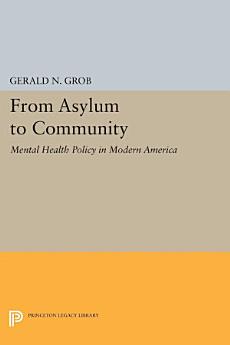
From Asylum to Community: Mental Health Policy in Modern America
Jul 2014 · Princeton University Press
Ebook
434
Pages
family_home
Eligible
info
About this ebook
The distinguished historian of medicine Gerald Grob analyzes the post-World War II policy shift that moved many severely mentally ill patients from large state hospitals to nursing homes, families, and subsidized hotel rooms--and also, most disastrously, to the streets. On the eve of the war, public mental hospitals were the chief element in the American mental health system. Responsible for providing both treatment and care and supported by major portions of state budgets, they employed more than two-thirds of the members of the American Psychiatric Association and cared for nearly 98 percent of all institutionalized patients. This study shows how the consensus for such a program vanished, creating social problems that tragically intensified the sometimes unavoidable devastation of mental illness. Examining changes in mental health care between 1940 and 1970, Grob shows that community psychiatric and psychological services grew rapidly, while new treatments enabled many patients to lead normal lives. Acute services for the severely ill were expanded, and public hospitals, relieved of caring for large numbers of chronic or aged patients, developed into more active treatment centers. But since the main goal of the new policies was to serve a broad population, many of the most seriously ill were set adrift without even the basic necessities of life. By revealing the sources of the euphemistically designated policy of "community care," Grob points to sorely needed alternatives.
Originally published in 1991.
The Princeton Legacy Library uses the latest print-on-demand technology to again make available previously out-of-print books from the distinguished backlist of Princeton University Press. These editions preserve the original texts of these important books while presenting them in durable paperback and hardcover editions. The goal of the Princeton Legacy Library is to vastly increase access to the rich scholarly heritage found in the thousands of books published by Princeton University Press since its founding in 1905.
The distinguished historian of medicine Gerald Grob analyzes the post-World War II policy shift that moved many severely mentally ill patients from large state hospitals to nursing homes, families, and subsidized hotel rooms--and also, most disastrously, to the streets. On the eve of the war, pub...
Rate this ebook
Tell us what you think.
Reading information
Smartphones and tablets
Install the Google Play Books app for Android and iPad/iPhone. It syncs automatically with your account and allows you to read online or offline wherever you are.
Laptops and computers
You can listen to audiobooks purchased on Google Play using your computer's web browser.
eReaders and other devices
To read on e-ink devices like Kobo eReaders, you'll need to download a file and transfer it to your device. Follow the detailed Help Center instructions to transfer the files to supported eReaders.