About this ebook
Andre Gide once said that Feodor Dostoevsky "lost himself in the characters of his books, and, for this reason, it is in them that he can be found again." In "Dostoevsky: The Author as Psychoanalyst", Louis Breger approaches Dostoevsky psychoanalytically, not as a "patient" to be analyzed, but as a fellow psychoanalyst, someone whose life and fiction are intertwined in the process of literary self-exploration.Raskolnikov's dream of the suffering horse in "Crime and Punishment" has become one of the best known in all literature, its rich imagery expressing meaning on many levels. Using this as a starting point, Breger goes on to offer a detailed analysis of the novel, situating it at the pivotal point in Dostoevsky's life between the death of his first wife and his second marriage. Using insights from his psychological training, Breger also explores other works by Dostoevsky, among them his early novel, "The Double", which Breger relates to the nervous breakdown that Dostoevsky suffered in his twenties, as well as "Notes from Underground", "The Possessed", "The Idiot", "The Brothers Karamazov", and so forth. Additionally, details from Dostoevsky's own life - his compulsive gambling, his epilepsy, his philosophical, political, religious, and mystical beliefs, and the interpretations of them found in existing biographies - are analyzed in detail.
Andre Gide once said that Feodor Dostoevsky "lost himself in the characters of his books, and, for this reason, it is in them that he can be found again." In "Dostoevsky: The Author as Psychoanalyst", Louis Breger approaches Dostoevsky psychoanalytically, not as a "patient" to be analyzed, but as...
About the author
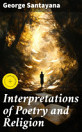
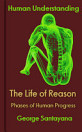
A gentle philosopher-poet, born and reared in Spain, educated at Harvard University and later professor of philosophy there, George Santayana resided in England, France, and Italy after 1914. At the beginning of World War II, he entered the nursing home in Rome managed by nuns known as the Blue Sisters and remained there until his death. His last book, The Poet's Testament (1953), contains a few unpublished lyrics, several translations, and two plays in blank verse. The title comes from the poem read at his funeral, which begins: "I give back to the earth what the earth gave/All to the furrow, nothing to the grave." Santayana wrote philosophy in an inimitable prose, enriched with imagery and metaphor. His meanings were always complex and often ironic. In this style, so untypical of the professionalized philosophy common in the English-speaking world during his lifetime, Santayana nevertheless articulated an epistemological critical realism and an ontology of essence and matter that drew the attention and admiration of philosophers and scholars. His first published philosophical book, The Sense of Beauty (1896), was an important contribution in aesthetics, a classic text that is still in use. His multivolume work The Life of Reason expresses his naturalistic philosophy of history and culture. It states the essence of his attitude toward nature, life, and society. Scepticism and Animal Faith (1923) presents his theory of knowledge and also serves as an introduction to his system of philosophy, Realms of Being (1927--40). The titles of the separate volumes of this remarkable work, now out of print, reveal the lineaments of his system: Realm of Essence (1927), Realm of Matter (1930), Realm of Truth (1937), and Realm of Spirit (1940). His ideas were "popularized" in his only novel, The Last Puritan, which became a surprise bestseller overnight. According to the New York Times, "He came into a changing American scene with a whole group of concepts that enormously enriched our thinking. He gave a moving vitality to what had often been obscure abstractions... he made the whole relationship of reason and beauty, each to the other, come alive and stay alive." Although Santayana's Complete Poems (1975) is out of print, several volumes of his poetry are available and are listed below. Publication of The Complete Works of George Santayana, under the general editorship of Herman J. Saatkamp, Jr., is in progress. Conforming to the guidelines of a critical edition, The Complete Works is a long-range multivolume project of which a few volumes have already appeared to critical acclaim.
A gentle philosopher-poet, born and reared in Spain, educated at Harvard University and later professor of philosophy there, George Santayana resided in England, France, and Italy after 1914. At the beginning of World War II, he entered the nursing home in Rome managed by nuns known as the Blue S...
Rate this ebook
Tell us what you think.
Reading information
Smartphones and tablets
Install the Google Play Books app for Android and iPad/iPhone. It syncs automatically with your account and allows you to read online or offline wherever you are.
Laptops and computers
You can listen to audiobooks purchased on Google Play using your computer's web browser.
eReaders and other devices
To read on e-ink devices like Kobo eReaders, you'll need to download a file and transfer it to your device. Follow the detailed Help Center instructions to transfer the files to supported eReaders.