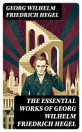
The Introduction to Hegel's Philosophy of Fine Arts: Restored Classics to Go Edition
About this ebook
Discover more
About the author
Georg Wilhelm Friedrich Hegel was a German philosopher born in 1770 in Stuttgart, whose life unfolded amid the upheavals of the Enlightenment, the French Revolution, and the reshaping of Europe after Napoleon. Educated at the seminary in Tübingen, he began as a theology student before becoming one of the most influential thinkers of German Idealism, later teaching in Jena, Heidelberg, and Berlin, where he developed the sweeping philosophical system that made his name enduringly central to modern thought. Hegel's writing ranges across history, politics, religion, logic, and aesthetics, and his most important achievement lies in the bold ambition to show reality as a living process of development, contradiction, and resolution. In his reflections on art and beauty, he argued that artistic expression is not merely decoration but a profound way in which human beings understand freedom, spirit, and the meaning of their world. His central themes of historical change, self-consciousness, freedom, and the unfolding of human culture remain strikingly relevant today, especially in an age still wrestling with social transformation, identity, and the place of art in public life. Hegel's legacy is immense: he shaped philosophy, political theory, literary criticism, theology, and cultural studies, and even those who disagree with him continue to think through problems he helped define. Readers who enjoy demanding ideas, the history of thought, and the deep connection between art and human experience will find Hegel especially rewarding.