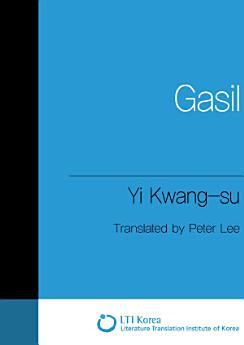
Gasil

· 20th Century Korean Literature · Literature Translation Institute of Korea
3 recenzije
E-knjiga
53
Broj stranica
Alati

O ovoj e-knjizi

 “Gasil” (1923) is a story based on the tale of “Seol’s Daughter and Gasil” appearing in The History of the Three Kingdoms, which deals with the moral and heroic acts of a young man. To keep his promise to Seol’s daughter, Gasil faces danger in ferocious battles and he also overcomes the temptation from his master’s daughter. The story focuses on his faithfulness and inner conflicts, which serve to highlight his upright character. The tale becomes a means of expressing the author’s views on morality. This is a common tendency noticeable in all his stories dealing with historical subjects.
“Gasil” (1923) is a story based on the tale of “Seol’s Daughter and Gasil” appearing in The History of the Three Kingdoms, which deals with the moral and heroic acts of a young man. To keep his promise to Seol’s daughter, Gasil faces danger in ferocious battles and he also overcomes the temptati...

Otkrijte više

Ocjene i recenzije

3 recenzije

O autoru

 Yi Kwang-su (1892-1950), the author of Mujeong (1917), is regarded as a pioneer of modern fiction and a leading voice in modern Korean literature. As a scholar and thinker of the Enlightenment movement, he played an important role in forming the current intellectual history of Korea. His works criticized the irrationality of the old conventions shackled by Confucian traditions while advocating the enlightened views of his age, and he helped create the modern consciousness and raised ideas to strengthen Korea through new education and civilizing forces. He also changed the internal grammar of narrative literature, which had until then been pre-modern, and played a role in proving that Korean was an appropriate language for modern fiction, in which the self and the world could simultaneously be depicted.

Because of Yi Kwang-su’s pro-Japanese stance in his later years, the importance of his literary accomplishments has sometimes been questioned. Such criticism, however, can make the mistake of neglecting the contribution that his early short stories in the 1910s and works, such as Mujeong, made to Korean literary history. He was a columnist who published around 300 editorials, such as “Children-centered Theory” and “Theory of Nation Reconstruction”; a literary critic who wrote around 50 reviews, such as “What is Literature?” and “Criteria for Evaluating Art”; an author of 28 short stories, including “To My Little Friend,” “Gasil,” and “Mumyeong,” and 35 novels, including Mujeong, The Soil, Love, and Great Priest Wonhyo; a poet who published numerous poems, including “Our Hero” and “Spring in Gangnam”; and a prolific essayist of such works as “Mt. Geumgang Travelogue” and “My Confession.” His vast literary world, which crosses all genres, thus demands an assessment that befits his accomplishments.
Yi Kwang-su (1892-1950), the author of Mujeong (1917), is regarded as a pioneer of modern fiction and a leading voice in modern Korean literature. As a scholar and thinker of the Enlightenment movement, he played an important role in forming the current intellectual history of Korea. His works c...

Ocijenite ovu e-knjigu

Recite nam šta mislite.

Informacije o čitanju

Pametni telefoni i tableti
Instalirajte aplikaciju Google Play Knjige za Android i iPad/iPhone uređaje. Aplikacija se automatski sinhronizira s vašim računom i omogućava vam čitanje na mreži ili van nje gdje god da se nalazite.
Laptopi i računari
Audio knjige koje su kupljene na Google Playu možete slušati pomoću web preglednika na vašem računaru.
Elektronički čitači i ostali uređaji
Da čitate na e-ink uređajima kao što su Kobo e-čitači, morat ćete preuzeti fajl i prenijeti ga na uređaj. Pratite detaljne upute Centra za pomoć da prenesete fajlove na podržane e-čitače.