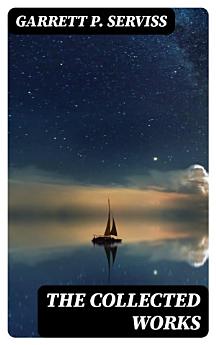
The Collected Works
Garrett P. Serviss
Nov 2022 · DigiCat
Ebook
815
Pages
family_home
Eligible
info
About this ebook
In "The Collected Works," Garrett P. Serviss presents a fascinating amalgamation of science fiction narratives, essays, and scientific explorations that highlight his innovative literary style. Intertwining imaginative storytelling with emerging scientific concepts of his era, Serviss captures the spirit of late 19th and early 20th-century speculative fiction. His writing fuses detailed descriptions with a narrative flair, effectively engaging readers while stimulating their curiosity about the universe and its mysteries. Notable among his contributions is the emphasis on scientific plausibility, a hallmark of Serviss's work that renders his fantastical elements grounded yet visionary. Garrett P. Serviss was not just a writer but a meticulous scholar and a vocal advocate for science. His background in astronomy and engineering provided him with a unique lens through which he explored speculative ideas, setting him apart in the genre. Influenced by contemporaries such as H.G. Wells and Jules Verne, Serviss sought to push the boundaries of human imagination while instilling a sense of wonder about scientific advancement and the cosmos. "The Collected Works" is a must-read for enthusiasts of classic science fiction and anyone intrigued by the confluence of literature and science. Serviss's innovative narrative techniques and visionary ideas make this collection an essential addition to the library of anyone interested in the evolution of speculative fiction.
In "The Collected Works," Garrett P. Serviss presents a fascinating amalgamation of science fiction narratives, essays, and scientific explorations that highlight his innovative literary style. Intertwining imaginative storytelling with emerging scientific concepts of his era, Serviss captures th...
Discover more
About the author
Garrett Putman Serviss (1851-1929) was an American astronomer, popularizer of astronomy, and early science fiction writer. With a distinctive blend of scientific knowledge and imaginative vision, Serviss carved out a niche in the literary world of the late 19th and early 20th centuries. His educational background in science—he attended Cornell University and graduated with a law degree—enabled him to bring a sense of authenticity to his speculative writings. 'The Collected Works' of Serviss showcases his capacity to meld accurate scientific principles with inventive narratives, a skill that bewitched readers of his time and influenced subsequent generations of science fiction writers. Serviss's literary style is marked by meticulous attention to detail and an ability to elucidate complex scientific theories to lay readers. In 'Edison's Conquest of Mars' (1898), a notable work and an unauthorized sequel to H.G. Wells's 'The War of the Worlds,' Serviss pioneered the space opera subgenre with grand interplanetary battles and innovative technological inventions. His oeuvre, including works such as 'Astronomy with the Naked Eye' (1908) and 'Curiosities of the Sky' (1909), reflects a passion for educating the public about celestial wonders while indulging in the boundless possibilities offered by scientific advancements. Serviss's writings remain a testament to the enduring appeal of science fiction that is grounded in real-world science, and his influence persists in the genre's continued fascination with the cosmos.
Garrett Putman Serviss (1851-1929) was an American astronomer, popularizer of astronomy, and early science fiction writer. With a distinctive blend of scientific knowledge and imaginative vision, Serviss carved out a niche in the literary world of the late 19th and early 20th centuries. His educa...
Rate this ebook
Tell us what you think.
Reading information
Smartphones and tablets
Install the Google Play Books app for Android and iPad/iPhone. It syncs automatically with your account and allows you to read online or offline wherever you are.
Laptops and computers
You can listen to audiobooks purchased on Google Play using your computer's web browser.
eReaders and other devices
To read on e-ink devices like Kobo eReaders, you'll need to download a file and transfer it to your device. Follow the detailed Help Center instructions to transfer the files to supported eReaders.