About this ebook
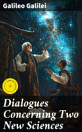
In "Dialogues Concerning Two New Sciences," Galileo Galilei presents a groundbreaking exploration of kinematics and the strength of materials, framed as a dialogue between three characters: Salviati, Sagredo, and Simplicio. The text is characterized by its accessible prose and rigorous logical argumentation, reflecting the Renaissance's burgeoning emphasis on empirical observation and mathematical reasoning. Through this engaging narrative structure, Galileo adeptly contrasts the findings of modern science against the Aristotelian views, which dominated the scholastic tradition of the time, thereby laying the foundation for the scientific revolution. Galileo, often regarded as the father of modern science, was profoundly shaped by his experiences in a tumultuous era marked by the intersection of faith and science. His innovations in the scientific method and commitment to observation inspired a new approach to understanding the natural world, exemplified in this work. His background in mathematics and physics, as well as his prior conflicts with the Church, further fueled his determination to challenge traditional doctrines, positioning him as a vital figure in the pursuit of knowledge. "Dialogues Concerning Two New Sciences" is an essential read for those interested in the evolution of scientific thought and the conflict between emerging empirical evidence and established authority. Readers will find Galileo's insights not only illuminating for their historical context but also profoundly relevant as they navigate the enduring questions regarding the nature of truth and knowledge in the modern world. In this enriched edition, we have carefully created added value for your reading experience: - A succinct Introduction situates the work's timeless appeal and themes. - The Synopsis outlines the central plot, highlighting key developments without spoiling critical twists. - A detailed Historical Context immerses you in the era's events and influences that shaped the writing. - An Author Biography reveals milestones in the author's life, illuminating the personal insights behind the text. - A thorough Analysis dissects symbols, motifs, and character arcs to unearth underlying meanings. - Reflection questions prompt you to engage personally with the work's messages, connecting them to modern life. - Hand‐picked Memorable Quotes shine a spotlight on moments of literary brilliance. - Interactive footnotes clarify unusual references, historical allusions, and archaic phrases for an effortless, more informed read.
In "Dialogues Concerning Two New Sciences," Galileo Galilei presents a groundbreaking exploration of kinematics and the strength of materials, framed as a dialogue between three characters: Salviati, Sagredo, and Simplicio. The text is characterized by its accessible prose and rigorous logical ar...
Discover more
About the author
Galileo Galilei (1564–1642) was an Italian astronomer, physicist, engineer, philosopher, and mathematician who is often referred to as the 'father of observational astronomy,' the 'father of modern physics,' the 'father of the scientific method,' and the 'father of modern science.' His contributions to the realm of science are monumental. In his writing, Galileo employed a dialogic style, engaging with both the layman and the learned scholar. A pinnacle of his literary and scientific work is found in 'Dialogues Concerning Two New Sciences' (1638), which discusses the strength of materials and the motions of objects, laying the groundwork for classical physics. In this text, Galileo dialogues within a fictionalized conversation between a teacher, Salviati, who represents Galileo's views, and two students, Sagredo and Simplicio, who explore opposing views. His articulate arguments and observations in this book, as well as others, reflect his exceptional ability to fuse observational clarity with literary finesse. Galileo's styles of inquiry and communication revolutionized the way scientific knowledge was disseminated and critically challenged conventional wisdom, leaving an indelible mark on scientific discourse and methodology. Despite facing opposition from the Catholic Church, Galileo's work ultimately transformed the intellectual landscape of the Renaissance and propelled the scientific revolution forward.
Galileo Galilei (1564–1642) was an Italian astronomer, physicist, engineer, philosopher, and mathematician who is often referred to as the 'father of observational astronomy,' the 'father of modern physics,' the 'father of the scientific method,' and the 'father of modern science.' His contributi...
Rate this ebook
Tell us what you think.
Reading information
Smartphones and tablets
Install the Google Play Books app for Android and iPad/iPhone. It syncs automatically with your account and allows you to read online or offline wherever you are.
Laptops and computers
You can listen to audiobooks purchased on Google Play using your computer's web browser.
eReaders and other devices
To read on e-ink devices like Kobo eReaders, you'll need to download a file and transfer it to your device. Follow the detailed Help Center instructions to transfer the files to supported eReaders.