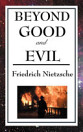
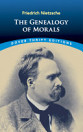
BEYOND GOOD AND EVIL
About this ebook
Through a series of essays and aphorisms, Nietzsche examines topics including the nature of good and evil, the role of philosophers, the origins of moral judgments, the pursuit of knowledge, and the development of human values. He critiques conventional moral systems and calls for a reevaluation of the assumptions that guide human thought and behavior.
Known for its sharp observations and provocative arguments, Beyond Good and Evil remains a foundational work in philosophy. It continues to influence discussions in ethics, psychology, political theory, literature, and cultural criticism.
About the author
Friedrich Nietzsche (1844–1900) was a German philosopher, cultural critic, essayist, and classical philologist whose writings had a profound impact on modern philosophy and intellectual history. Born in Röcken, Prussia, Nietzsche demonstrated exceptional academic ability and became a professor of classical philology at the University of Basel at the age of 24.
Nietzsche’s work challenged traditional ideas about morality, religion, truth, culture, and human existence. His influential books include Thus Spoke Zarathustra, Beyond Good and Evil, On the Genealogy of Morals, The Birth of Tragedy, and Twilight of the Idols. His philosophy introduced concepts such as the “will to power,” the critique of conventional morality, and the idea of the Übermensch.
Although controversial during his lifetime, Nietzsche’s ideas became highly influential across philosophy, literature, psychology, and cultural studies. His writings continue to inspire debate about ethics, individual freedom, creativity, and the nature of human values.