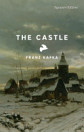
The Castle
About this ebook
K.’s only partial relief comes in his relationship with Frieda, the barmaid and mistress of Klamm, a high-ranking yet elusive Castle official. Their troubled romance reveals the social tensions and alienation permeating village life. K. also encounters strange and often comical assistants, cryptic messengers, and influential villagers who manipulate or obstruct him.
The novel remains unfinished, deepening its themes of existential uncertainty, powerlessness, and the absurdity of human efforts to gain meaning or control within impersonal systems. The Castle is a profound exploration of alienation and authority, portraying a protagonist trapped in a nightmarish maze of bureaucracy where power is simultaneously omnipresent yet unknowable.
Kafka’s narrative captures the emotional and psychological turmoil of modern existence, challenging readers to reflect on authority, identity, and communication in a seemingly indifferent world.
Discover more
Ratings and reviews
About the author
Franz Kafka (1883–1924) was a German-speaking Jewish writer born in Prague, then part of the Austro-Hungarian Empire. He came from a middle-class family; his father was a merchant and desired Franz to join the family business, but Franz pursued higher education instead. Kafka studied law at Charles University in Prague, earning a doctorate, and then worked in insurance for most of his life, balancing his day job with his literary ambitions.
Kafka's literary work was deeply influenced by his feelings of alienation, anxiety, and conflict with authority, themes reflected vividly in his writing. Despite his professional life, he devoted himself to writing in his spare time, producing a range of stories and novels characterized by surreal, nightmarish scenarios and complex psychological depth. His relationship with his demanding father was tense and influenced his introspective and sometimes bleak perspective.
Kafka experienced personal struggles with health, developing tuberculosis, which led to his early death at the age of 40. Most notably, his best-known works, including The Metamorphosis, The Trial, and The Castle, were published posthumously, as Kafka had instructed his friend Max Brod to destroy his manuscripts, a wish that was famously ignored.
Kafka’s writing style and themes gave rise to the term Kafkaesque, describing absurd, oppressive, and illogical bureaucratic systems. His work has exerted a profound influence on 20th- and 21st-century literature, philosophy, and art, establishing him as one of the major figures in modernist literature. His exploration of existential themes and human isolation continues to resonate with readers worldwide.